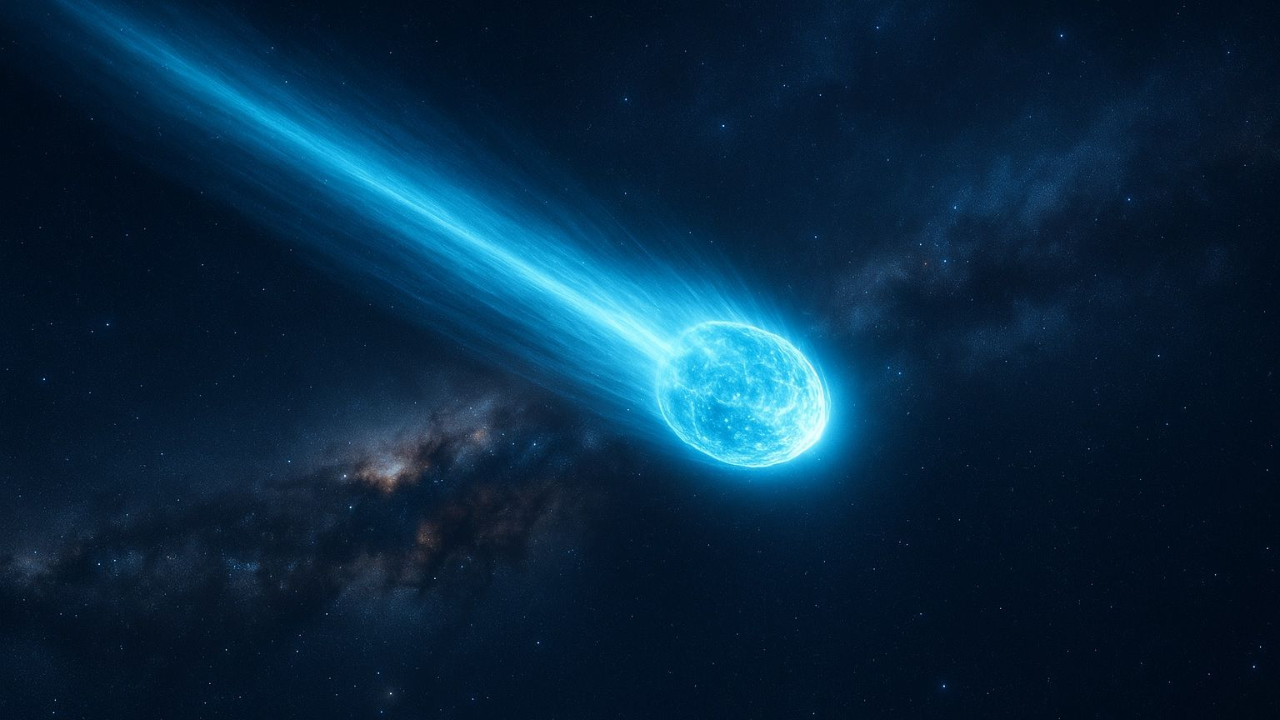
A comet called 3I/ATLAS, about the size of Manhattan, is speeding through our solar system at over roughly 124274 miles an hour.
Discovered on July 1, 2025, it’s our third confirmed interstellar visitor—meaning it came from outside our solar system, beyond the region influenced by the Sun’s gravity.
Scientists are excited and puzzled by its odd behavior, debating what makes this space traveler so unique compared to anything seen before.
Record Breaker
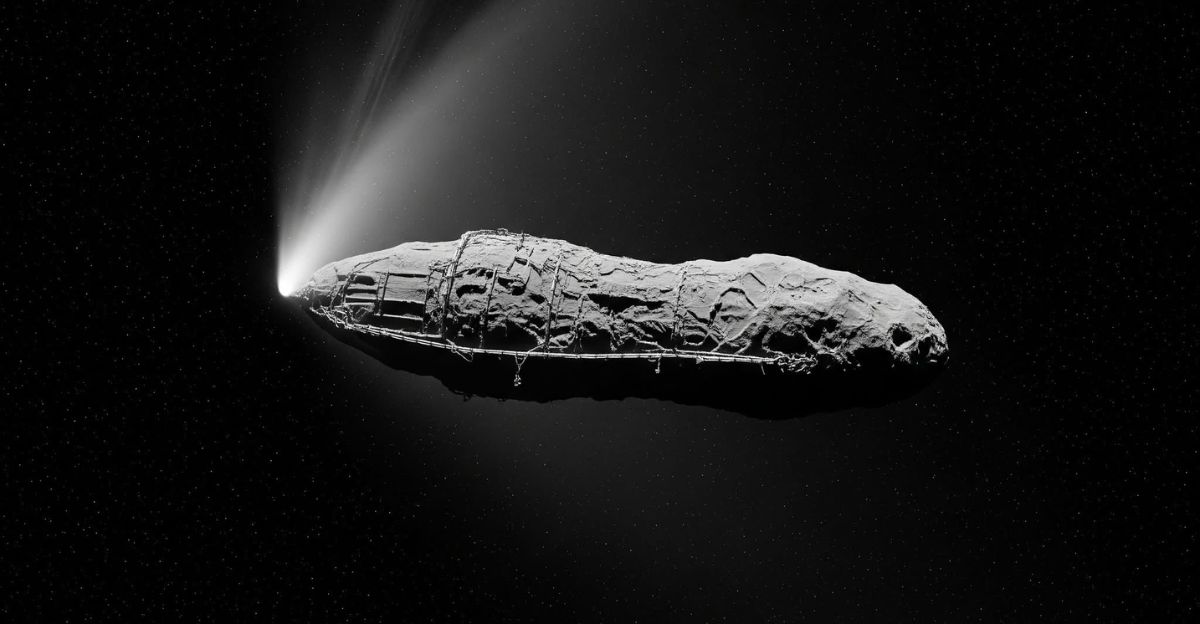
After introducing its unique nature, it’s worth noting that 3I/ATLAS is much larger than previous interstellar guests.
Its core is about 3.4 miles wide, making it enormous compared to 1I/’Oumuamua and 2I/Borisov.
Avi Loeb believes it could be over ten million times heavier than ‘Oumuamua if both were solid rock, though experts disagree about exact numbers, since nobody knows for sure what these comets are really made of.
Hyperbolic Journey
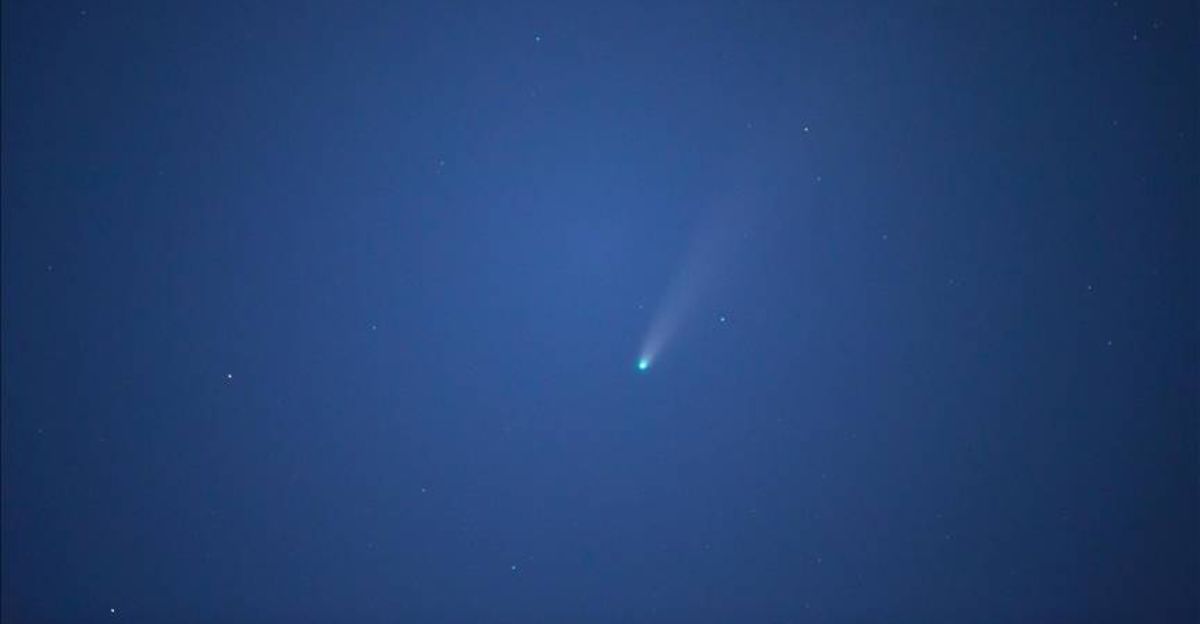
The comet’s extraordinary journey sets it apart even further. This comet doesn’t circle the Sun; it zooms on a path called a hyperbolic orbit, meaning it’s just passing through.
Its orbit eccentricity is about 6.1—the highest ever for these rare objects—proving it isn’t tied to our solar system.
It spent most of its life frozen in deep space before being warmed by the Sun’s rays as it got close.
Global Discovery

The story of its discovery highlights global teamwork. 3I/ATLAS was first spotted by an ATLAS telescope in Chile. Astronomers soon located older images from June 2025 at telescopes worldwide.
By combining data from multiple sites, scientists tracked the comet’s path before its official discovery, demonstrating how rapid global collaboration can lead to breakthroughs.
Outburst Near Sun
Its behavior became even more surprising as it neared the Sun. Something wild happened when 3I/ATLAS got close to the Sun at the end of October 2025.
It changed direction, moving faster than gravity alone should allow—scientists measured this as “non-gravitational acceleration.”
This means some force other than gravity, like jets of gas and dust blasting off the comet’s surface, is pushing it.
At the same time, it switched from looking reddish to glowing blue, and brightened much more quickly than regular comets do.
Earth’s Front Row
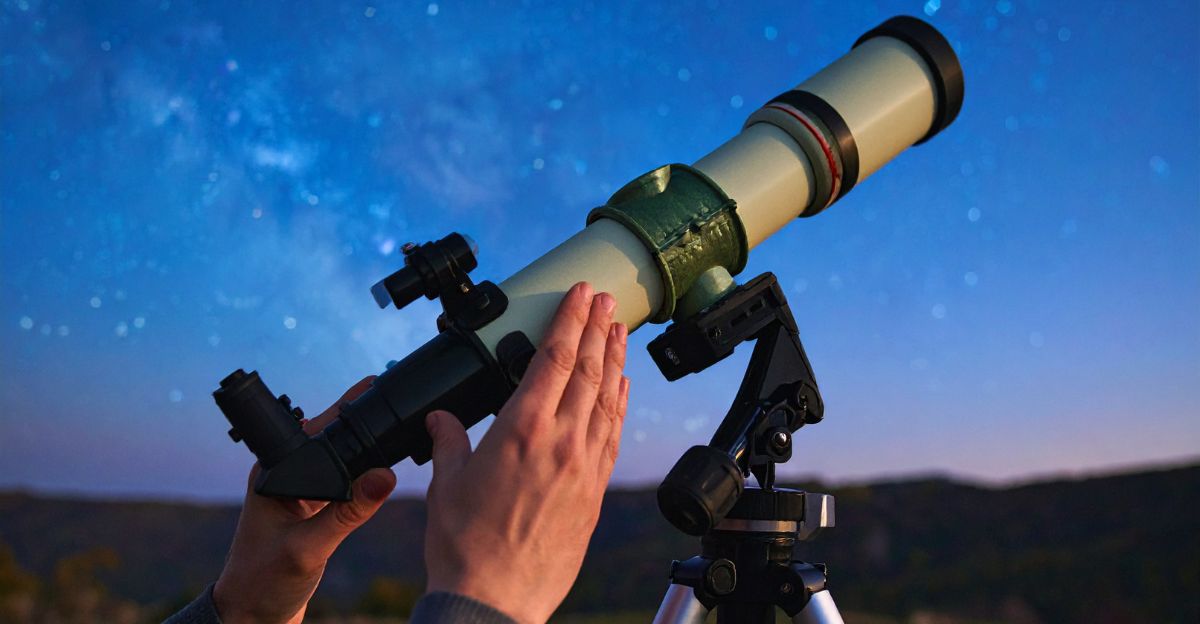
This rare comet event isn’t just for scientists. On December 19, 2025, 3I/ATLAS comes closest to Earth—about 167 million miles away, so there’s no danger.
But this is a rare chance for anyone with a decent telescope to spot an interstellar comet.
Night sky watchers in dark places will see the comet gradually fade as it moves farther away from our solar system.
Regional Impact
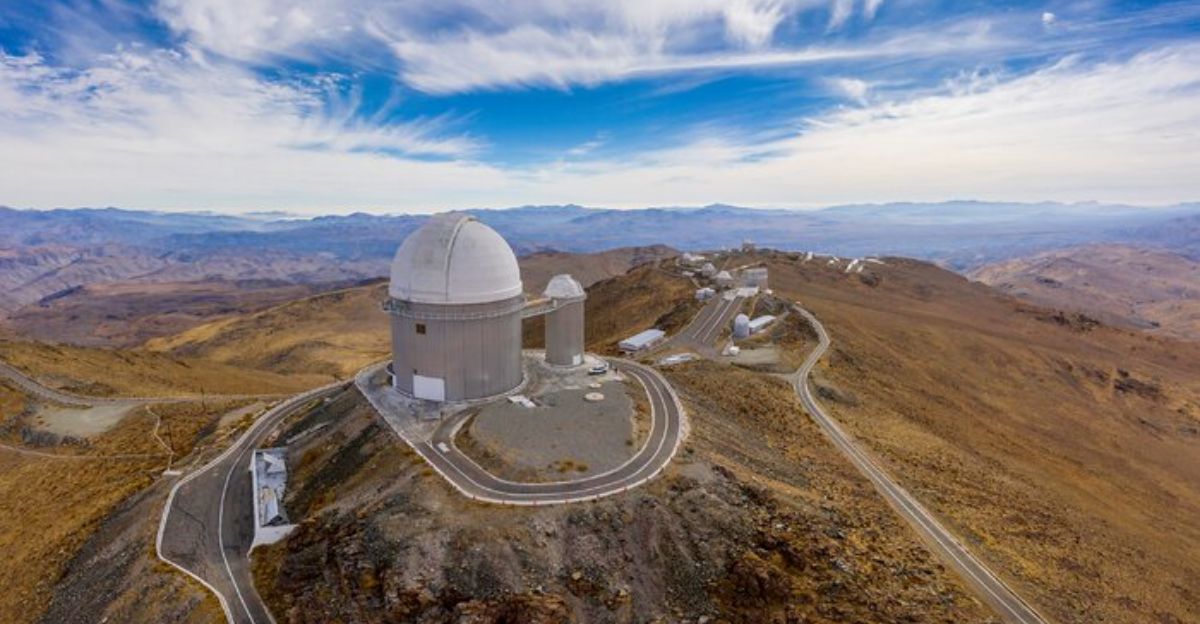
Such a remarkable visitor naturally drew a global response.
The arrival of 3I/ATLAS brought scientists together from around the world.
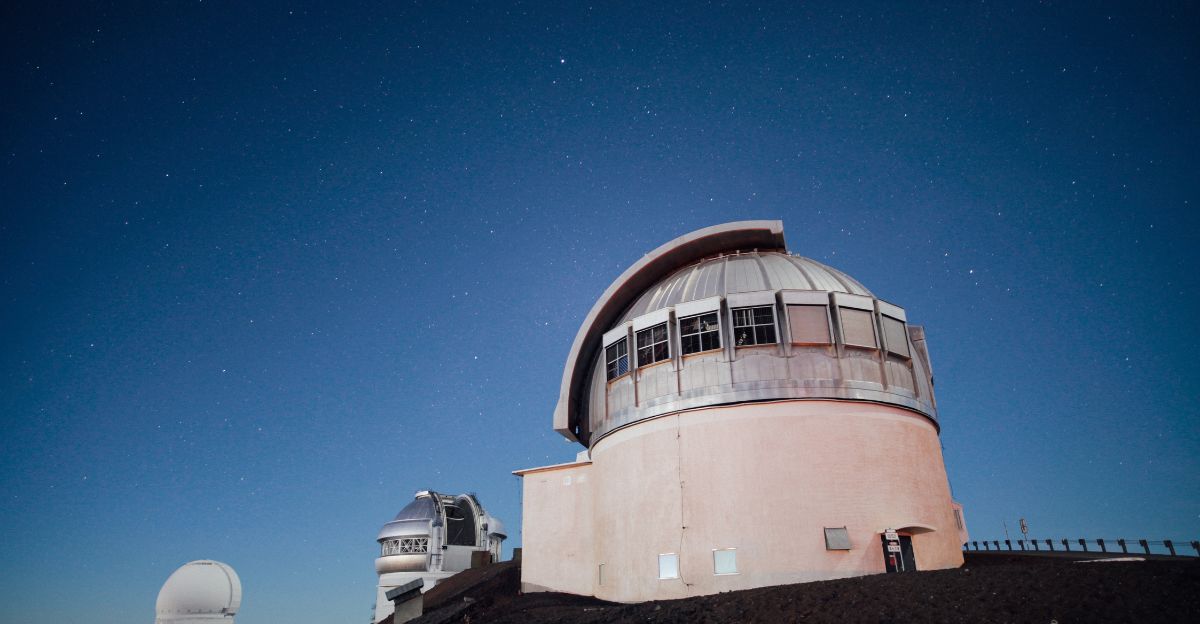
Major observatories in Chile, Hawaii, California, and Australia observed the comet, leading some to call it the most well-studied interstellar visitor.
Scientific Stakes
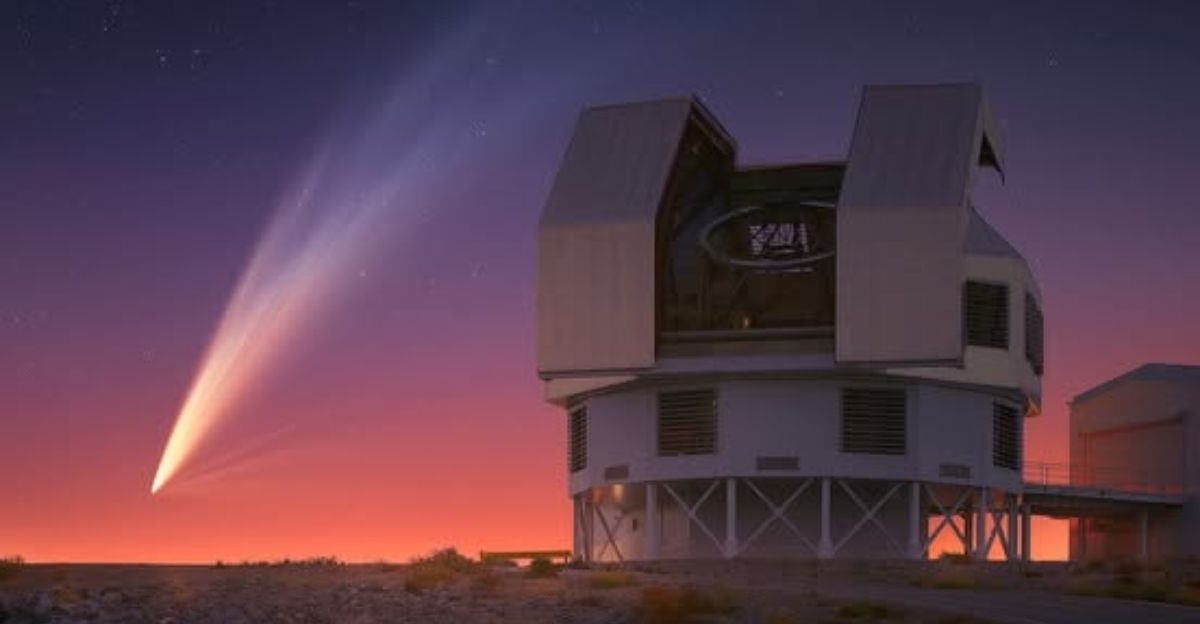
With so much attention, scientists have big hopes for what they’ll learn. Studying 3I/ATLAS may rewrite what we know about the formation of planets and comets.
The comet contains an unusually high ratio of carbon dioxide to water—about 8 to 1—which is different from regular solar system comets.
This hints it was formed under special conditions far from Earth, and could teach us about other star systems.
Expert Analysis
The study’s findings have already sparked fresh theories. Some experts think 3I/ATLAS must have been heated up and “cooked” before it shot out from its own star.
NASA scientist Charles Lisse says the high carbon dioxide and low carbon monoxide levels mean it was “well baked and boiled.”
This suggests that the comet formed close to its original star and was ejected into deep space billions of years ago.
Avi Loeb’s speculative “internal engine” idea
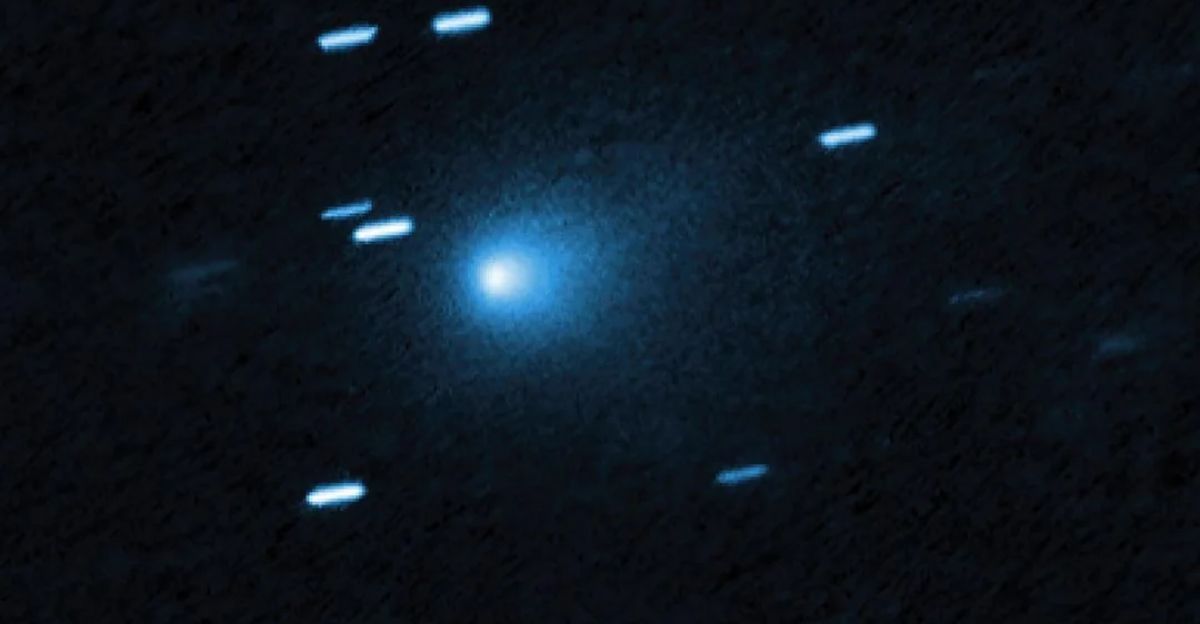
Debates about the comet’s nature make it even more intriguing. Avi Loeb, a Harvard scientist, wonders if there’s more to this comet than meets the eye.
He suggests its odd movements might be a sign of “an internal engine”—not just natural outgassing, which is when sunlight heats comet material, causing gases to erupt from its surface.
Loeb points to the comet’s huge size and strange path, saying it’s very rare. Most other scientists stick with the simple, natural explanation.
Internal Tensions
Disagreements among experts add to the mystery. Not everyone sees 3I/ATLAS the same way.
NASA’s Tom Statler insists it looks and behaves like a regular comet, while others remain open to new ideas.
Scientists are debating how much evidence is needed to take bold claims seriously, weighing caution against curiosity as they search for answers.
Ownership Shifts
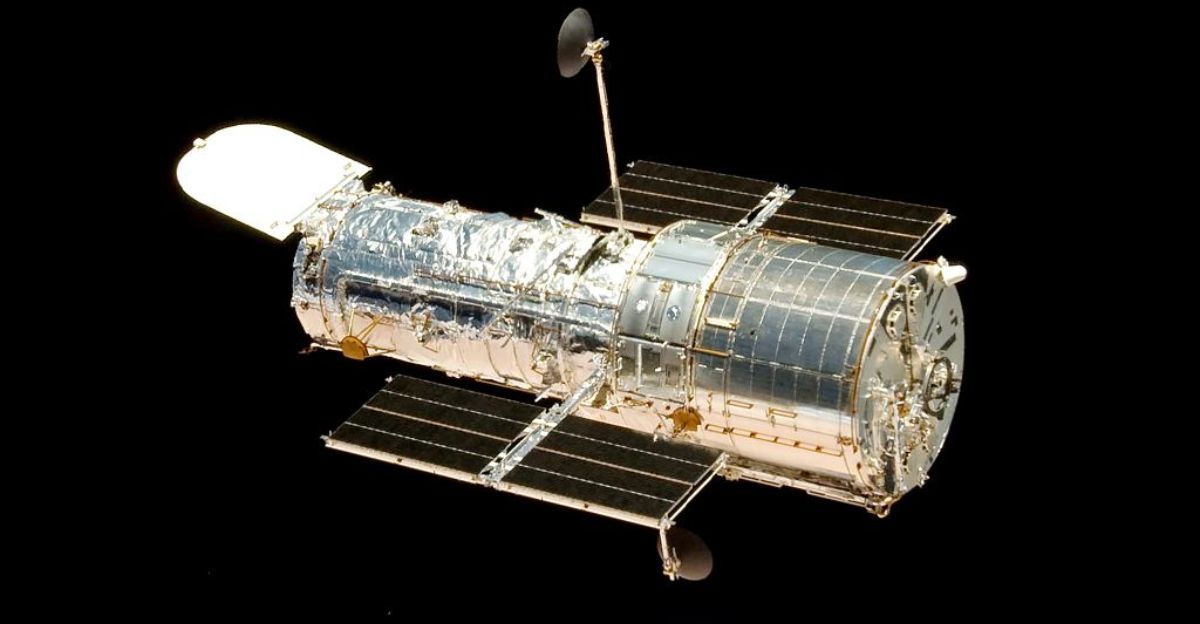
These debates require extensive collaboration. Tracking 3I/ATLAS requires teamwork between big space agencies.
NASA uses Hubble, James Webb, and the Solar Probe, while the European Space Agency (ESA) tracks it with Mars and Jupiter missions.
Everyone shares data, pushing the limits of international space science collaboration as the comet passes through our system.
Response Protocols

Such coordination reflects how quickly scientists mobilize. Scientists act fast when a rare chance like 3I/ATLAS arrives.
They utilized lessons from previous interstellar visitors to collect more data, thereby avoiding past mistakes that had resulted in missed opportunities.
Both ground- and space-based telescopes are gathering images, aiming to build a comprehensive record before the comet disappears.
Recovery Actions

Still, global efforts can face obstacles. Even global science faces setbacks.
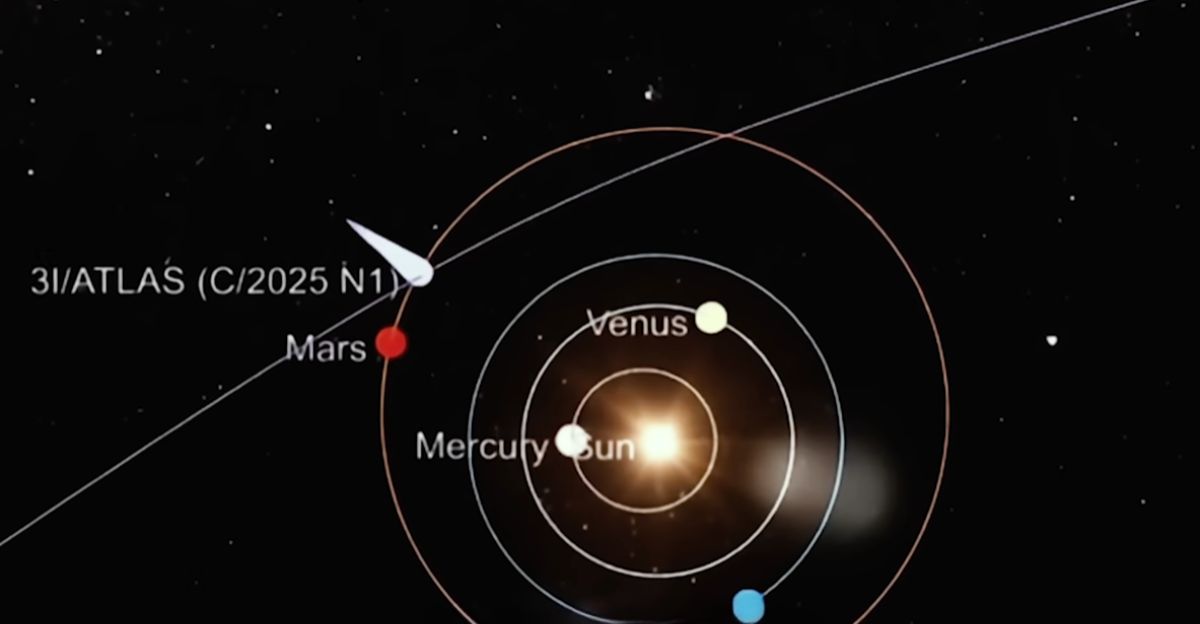
In October 2025, a U.S. government shutdown slowed down NASA’s ability to release key images of 3I/ATLAS near Mars.
Lawmakers, such as Representative Anna Paulina Luna, pushed NASA to act quickly so that scientists could study the comet before it faded from view.
Future Implications
Despite these hurdles, the next observation period is critical.
December’s close encounter gives scientists one last chance to learn from 3I/ATLAS before it vanishes.
Data from this period can help plan future missions to capture or study other interstellar visitors, potentially even bringing pieces back to Earth, and enhance our defense against cosmic objects.
Emerging Research
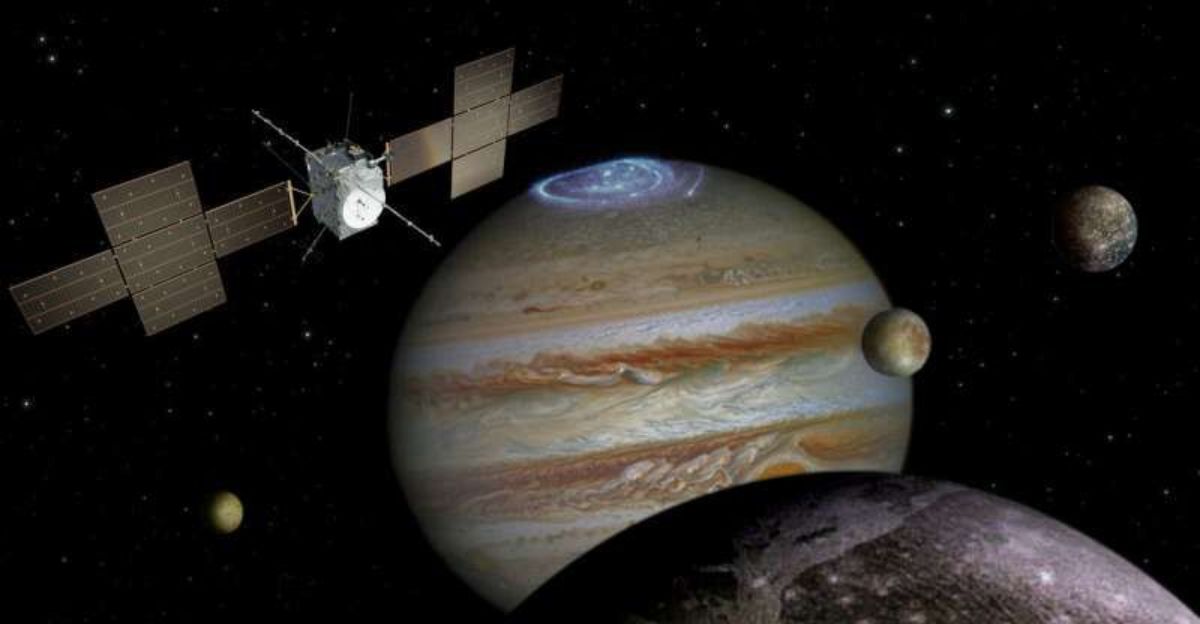
New missions are already adapting to the comet’s surprise visit. ESA’s Jupiter Icy Moons Explorer (JUICE) made surprise observations of 3I/ATLAS in November 2025.
Scientists are expected to receive detailed results in February 2026.
It’s the first time this spacecraft has studied an interstellar comet, showing how space missions can pivot quickly to grab breakthrough data.
Industry Relevance

Attention from the industry underscores the comet’s broader impact.
The comet sparks interest beyond astronomy. Space companies hope to mine asteroids and comets someday, using similar tracking tools to those pointed at 3I/ATLAS.
New monitoring and data methods can help manage the growing number of satellites crowding Earth’s space lanes.
Public Reaction

Of course, the public reaction is just as lively. Public interest in 3I/ATLAS is high, with discussions and various theories circulating online. Hashtags such as #AlienComet have appeared.
NASA’s Sean Duffy addressed public questions, noting there are “no aliens and no threat to Earth.”
Physicist Michio Kaku commented on the spread of misinformation and deepfake videos related to the comet.
Historical Precedent

Public reaction echoes past celestial events. Big space events always spark rumors and excitement.
People compared 3I/ATLAS to past scares and stories, such as Orson Welles’ “War of the Worlds” in 1938.
Previous interstellar visitors also sparked public interest, but 3I/ATLAS’s enormous size makes it even more intriguing.
Enduring Comet Impact

All told, 3I/ATLAS stands out as a scientific milestone. It provides us with rare clues about distant solar systems and what they’re composed of.
Despite wild theories, science reveals that the comet’s greatest value lies in what it teaches us about space, planet formation, and chemistry beyond Earth.
As it leaves our solar system, it will continue to spark curiosity for years to come.