For more than a century, astronomers theorized about the universe’s first generation of stars—massive, brilliant objects born from pristine hydrogen and helium in the cosmic dawn. Yet they remained invisible, locked in a past so distant that even the most powerful telescopes could not pierce the veil.
That changed on October 27, 2025, when researchers announced they had identified what may be the first direct observation of Population III stars, the universe’s primordial stellar nurseries, frozen in time 13 billion light-years away and 800 million years after the Big Bang.
The Search That Lasted Decades
Population III stars represent a holy grail of modern astronomy—the first light in a dark universe. These stars formed exclusively from hydrogen and helium left over from the Big Bang, containing no metals whatsoever. They were predicted to be extraordinarily massive, ranging from 10 to 1,000 times the Sun’s mass, burning so intensely their lives would span only a few million years before violent supernovae destroyed them.
For decades, scientists searched for direct evidence of these cosmic relics, yet previous candidates fell short of theoretical predictions.
The Gateway to Cosmic Genesis
The breakthrough centers on a distant star cluster called LAP1-B at a redshift of z=6.6, approximately 13 billion light-years away. What makes LAP1-B extraordinary is not merely its distance, but how researchers finally managed to see it.
The galaxy cluster MACS J0416, positioned between Earth and LAP1-B, acts as a gravitational lens—a phenomenon predicted by Albert Einstein in which massive objects warp spacetime and magnify distant background objects.
Gravity Bends Light and Bends Our Understanding
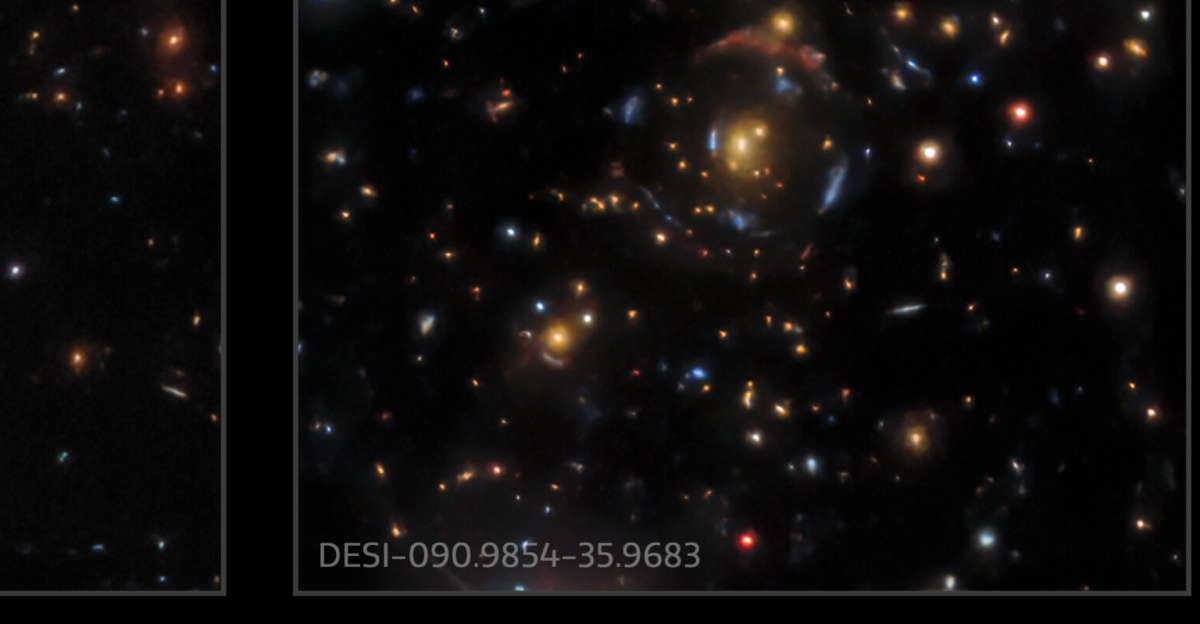
Gravitational lensing represents one of Einstein’s most spectacular predictions that made reality. According to general relativity, massive objects such as galaxy clusters curve spacetime itself, causing light from distant sources to bend and refract like rays passing through a glass lens.
This cosmic magnifying glass transformed LAP1-B from an unobservable speck into a detectable scientific treasure.
Three Predictions, One Star Cluster
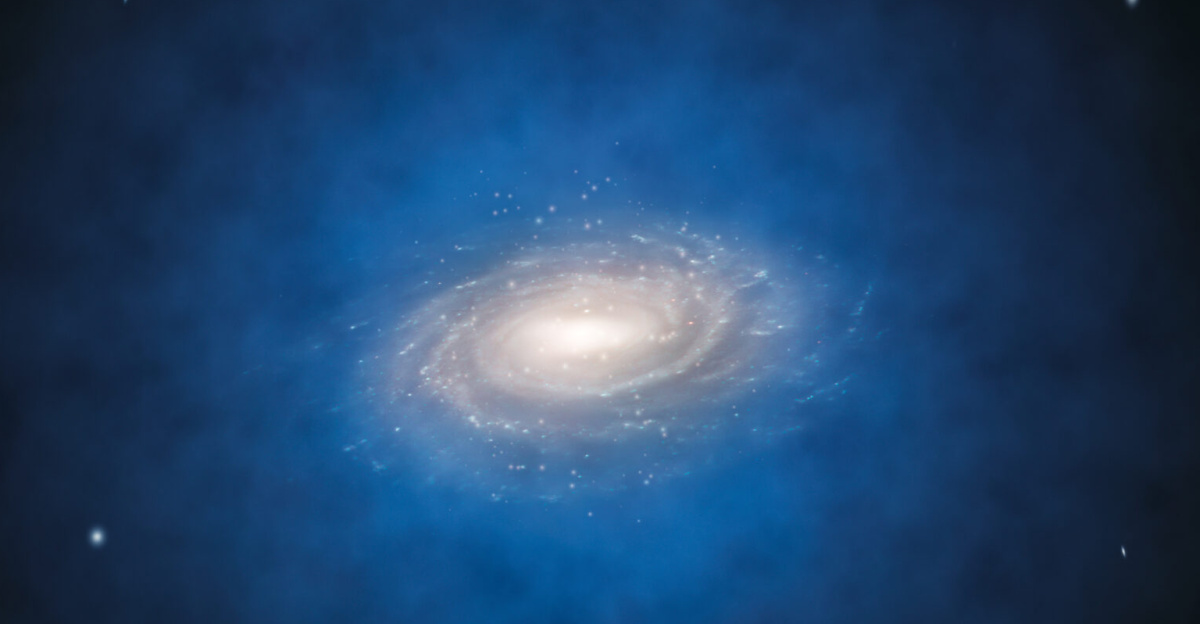
What distinguishes LAP1-B from previous Population III candidates is that it satisfies all three critical theoretical predictions. First, it formed in an extremely low-metallicity environment—a dark matter halo of approximately 50 million solar masses, matching predictions for the smallest halos capable of producing stars from hydrogen and helium alone.
Second, the stars themselves follow a “top-heavy” initial mass function, skewing toward the more massive end of the stellar spectrum. Third, the total stellar mass measures only a few thousand solar masses, consistent with predictions for small, primordial clusters.
A Cluster of Cosmic Monsters

Analysis of LAP1-B’s spectral characteristics reveals stars with estimated masses between 10 and 1,000 times that of the Sun. The lead research team, comprised of Eli Visbal, Ryan Hazlett, and Greg Bryan from the University of Toledo and Columbia University, noted that these massive stars generate extraordinarily intense ultraviolet radiation fields.
Such signatures distinguish Population III stars from metal-enriched stellar populations or active black holes, providing a fingerprint of primordial star formation that matches theoretical models precisely.
Oxygen from the First Supernova
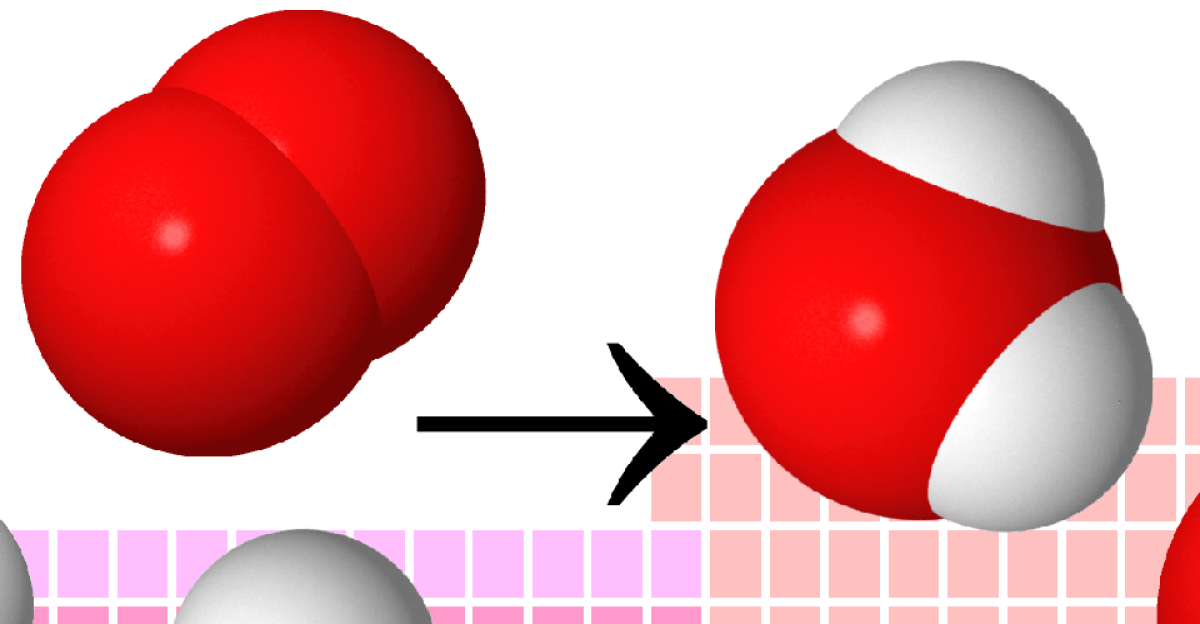
One of the most compelling pieces of evidence lies in the chemical composition of LAP1-B. The galaxy exhibits an oxygen-to-hydrogen ratio that indicates remarkably minimal metal enrichment compared to modern stars. This abundance can be explained by a single supernova explosion from a 40-solar-mass star, which yields approximately eight solar masses of oxygen—nearly matching the observed 10 solar masses of oxygen mixed throughout LAP1-B’s central region.
Alternatively, stellar winds from a handful of rapidly rotating massive stars could account for the observed metals, supporting the interpretation that these are newly formed Population III stars.
Born Yesterday, Dying Tomorrow
Stars of 40 solar masses or greater burn through their fuel in only a few million years—a cosmic eye-blink compared to the Sun’s 10-billion-year lifespan. Calculations suggest LAP1-B’s massive stars formed within the past 3 million years, placing them near the end of their existence.
The visibility window for Population III clusters is brutally narrow—roughly 3 million years separates their formation from metal pollution that would transform them into Population II stars and render them theoretically indistinguishable from conventional clusters.
When the Universe Was Built Anew
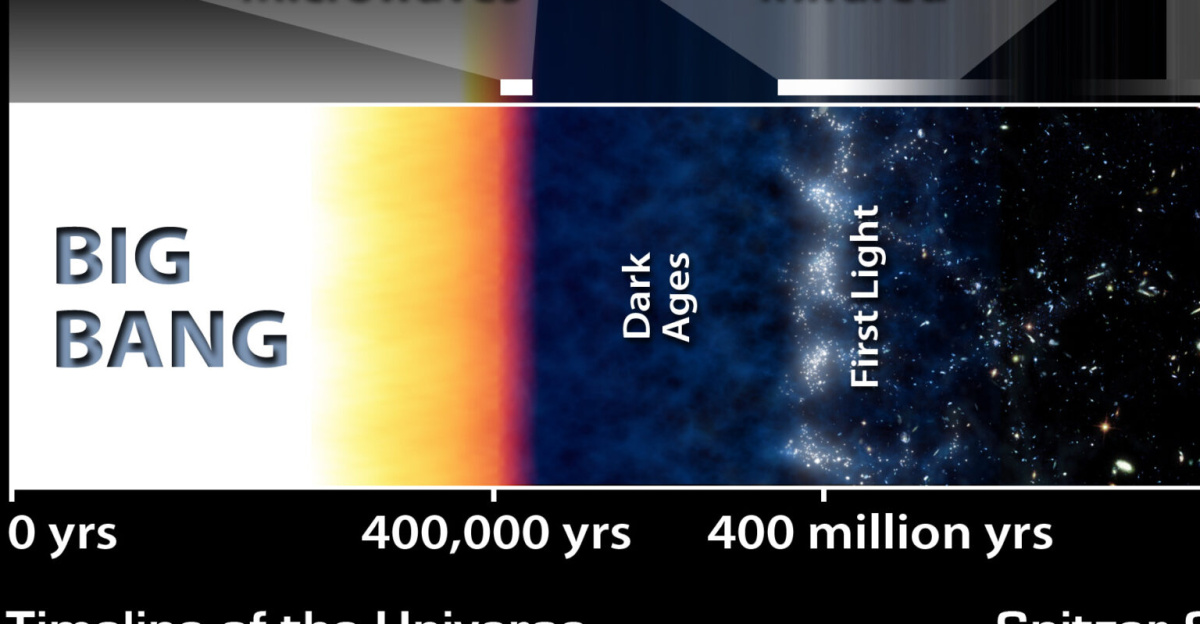
To understand LAP1-B’s significance, consider what Population III stars represent in cosmic history. The universe’s first 400,000 years were dark—a cold fog of hydrogen and helium atoms permeating an opaque cosmos. Then, within the next 200 million to 400 million years, the first stars ignited in low-mass dark matter halos, filling the universe with ultraviolet radiation and initiating chemical enrichment that persists to this day.
Every atom of carbon, oxygen, nitrogen, iron, and silicon in Earth’s rocks and flesh was manufactured inside stellar cores—first by Population III stars, then refined through subsequent generations. LAP1-B offers a direct window into that cosmic genesis.
A Halo at the Edge of Possibility
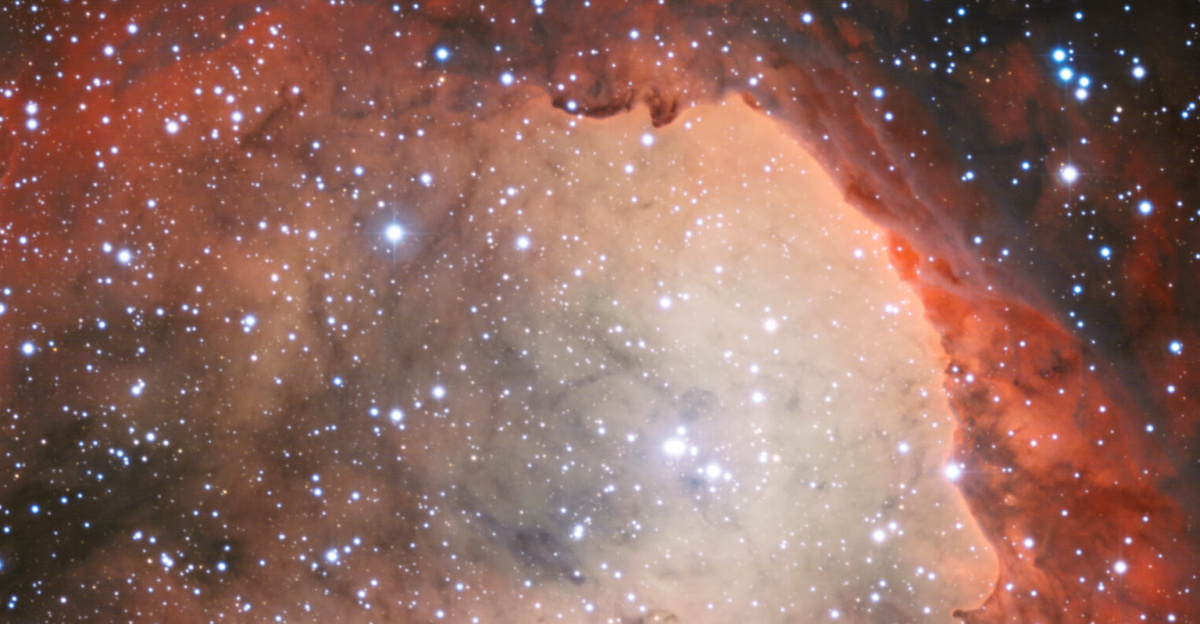
The dark matter halo hosting LAP1-B—approximately 50 million solar masses—sits near the theoretical minimum required for star formation to occur. Below this threshold, halos are too shallow to allow gas to cool sufficiently and collapse into stars; above it, additional star formation becomes possible.
This positioning at the edge of cosmic habitability lends further credibility to the Population III interpretation, as theoretical models specifically predict that the first stars should form in precisely such marginal environments.
The Magnification Jackpot
![This image from the NASA/ESA/CSA James Webb Space Telescope shows a massive galaxy cluster called WHL0137-08, and at the right, an inset of the most strongly magnified galaxy known in the Universe’s first billion years: the Sunrise Arc. Within that galaxy is the most distant star ever detected, <a rel="nofollow" class="external text" href="https://esahubble.org/news/heic2203/">first discovered</a> by the NASA/ESA Hubble Space Telescope.Webb’s NIRCam (<a rel="nofollow" class="external text" href="https://esawebb.org/about/instruments/nircam-niriss/">Near-Infrared Camera</a>) instrument reveals the star, nicknamed Earendel, to be a massive B-type star more than twice as hot as our Sun, and about a million times more luminous. Stars of this mass often have companions. Astronomers did not expect Webb to reveal any companions of Earendel since they would be so close together and indistinguishable on the sky. However, based solely on the colours of Earendel detected by Webb, astronomers think they see hints of a cooler companion star.Webb’s NIRCam also shows other remarkable details in the Sunrise Arc. Features include both young star-forming regions and older established star clusters. On either side of the wrinkle of maximum magnification, which runs right through Earendel, these features are mirrored by the distortion of the gravitational lens. The region forming stars appears elongated, and is estimated to be less than 5 million years old. Smaller dots on either side of Earendel are two images of one older, more established star cluster, estimated to be 10 million years or older. Astronomers determined this star cluster is gravitationally bound and likely to persist until the present day. This shows us how the globular clusters in our own Milky Way might have looked when they formed 13 billion years ago.[<em>Image description</em>: The image is split in half vertically to create two images. In the left image, a black background is scattered with hundreds of small galaxies of different shapes, ranging in colour from white to yellow to red. Some galaxies, mostly the redder galaxies, are distorted, appearing to be stretched out or mirror imaged. Just a little bit above the centre, there is a bright source of light, a star, with 8 bright diffraction spikes extending out from it. The right image is a zoomed-in portion of the image at the left, showing a particularly long, red, thin line that stretches from 1 o’clock to 7 o’clock. There are several bright dots, some thicker than others, along this line, with one labelled as Earendel.]](https://aws-wordpress-images.s3.amazonaws.com/ruckus/wp-content/uploads/2025/11/earendel-and-the-sunrise-arc-in-the-galaxy-cluster-whl0137-08-sunrisearc2-cropped.jpg)
Statistical calculations reveal just how fortunate this discovery is. Using semi-analytic models, Visbal’s team predicted that roughly one Population III galaxy, similar to LAP1-B, should be detectable at redshifts between 6 and 7 when accounting for gravitational magnification by galaxy clusters, such as MACS J0416.
LAP1-B’s discovery at z=6.6 matches this expectation almost perfectly, suggesting astronomers haven’t stumbled upon a cosmic freak but rather identified a representative example of an awaiting population. Earlier epochs (z>20) likely hosted more Population III stars but remain too faint; later epochs (z<6) would contain fewer.
Stars and Dark Matter
LAP1-B presents a striking puzzle that illuminates the role of dark matter in star formation. The dynamical mass derived from emission-line measurements suggests a dark matter halo of approximately 50 million solar masses, vastly exceeding the combined stellar and gas mass measured directly. Visible matter represents less than one percent of the system’s total gravitating mass.
This dramatic dark matter dominance is exactly what theoretical models predict for small halos hosting the universe’s first stars, providing independent confirmation that LAP1-B likely represents a primordial system untouched by metal enrichment.
The Supernova That Seeded the Elements
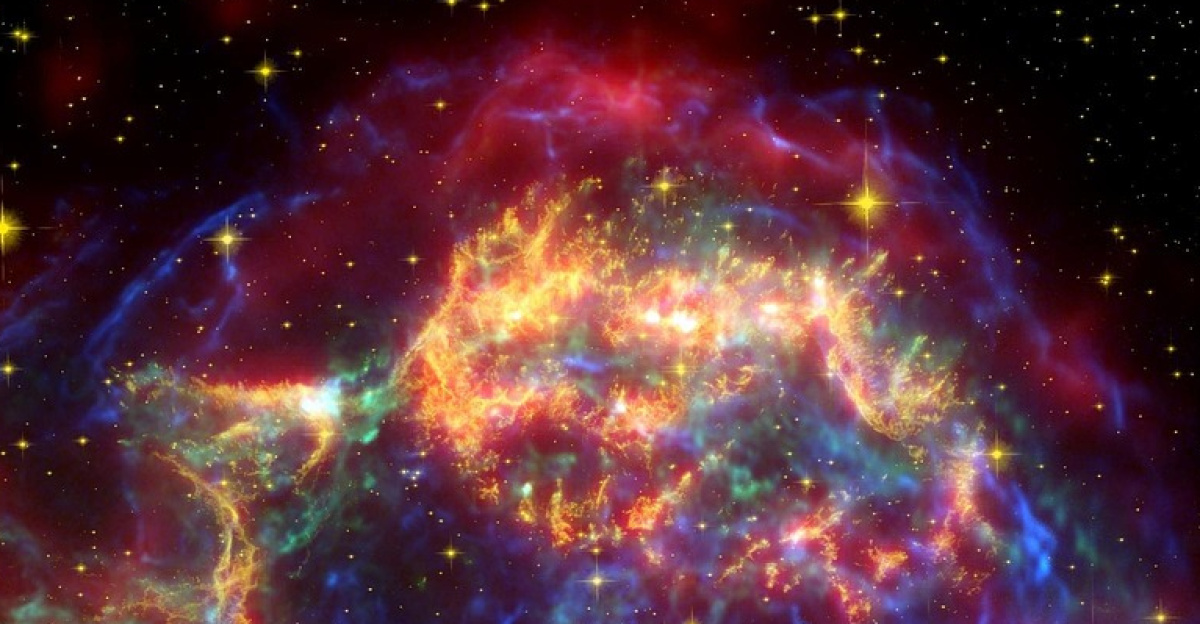
The oxygen detected in LAP1-B raises profound questions about the timing of cosmic chemical enrichment. If these stars have existed for only 3 million years, and one supernova suffices to explain the observed oxygen abundance, then the enrichment event likely occurred very recently—perhaps within the past 2.2 million years.
Computer simulations suggest that the supernova explosion initially ejects gas at velocities exceeding 1,000 kilometers per second, decelerating to near zero within 20 parsecs over roughly 2.2 million years.
The Hydrogen-Alpha Heartbeat
Among the most revealing spectroscopic signatures is the hydrogen-alpha emission line, which traces ionized hydrogen gas and provides insights into stellar radiation and dynamics. LAP1-B’s hydrogen-alpha line width and flux indicate not mere rotation but violent outflows driven by photoionization, stellar winds, or supernova shocks.
The gas mass within 20 parsecs measures approximately 400,000 solar masses, substantial enough to fuel continued star formation if enrichment doesn’t suppress it. This gaseous reservoir represents the material from which massive Population III stars recently formed and into which their first stellar catastrophes have begun to inject metals.
From First Light to First Flames
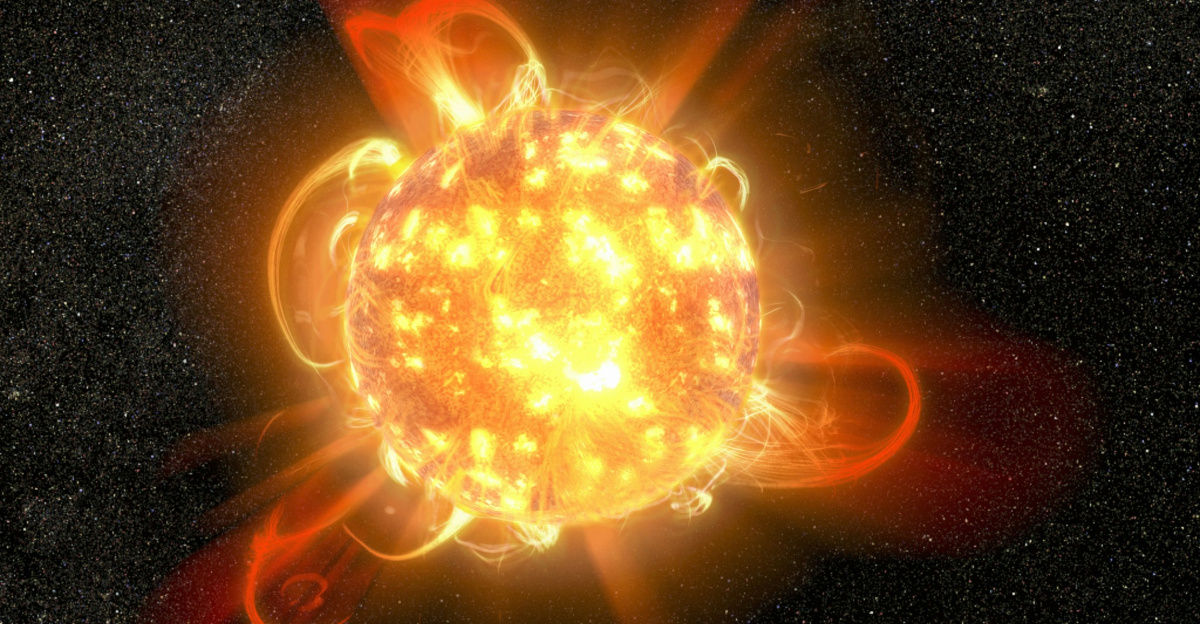
The transition from Population III to Population II stars represents one of the most profound phase changes in astronomy. Population II stars, which formed from material enriched by Population III supernovae, possess low but non-zero metallicity and are substantially less massive. Metal enrichment acts as a cooling agent, allowing smaller stars to form and live for billions of years rather than mere millions.
LAP1-B may represent the cosmic threshold between these regimes—the moment when the universe’s first generation of mega-stars began seeding conditions for the second generation’s emergence.
A Tip of an Invisible Iceberg
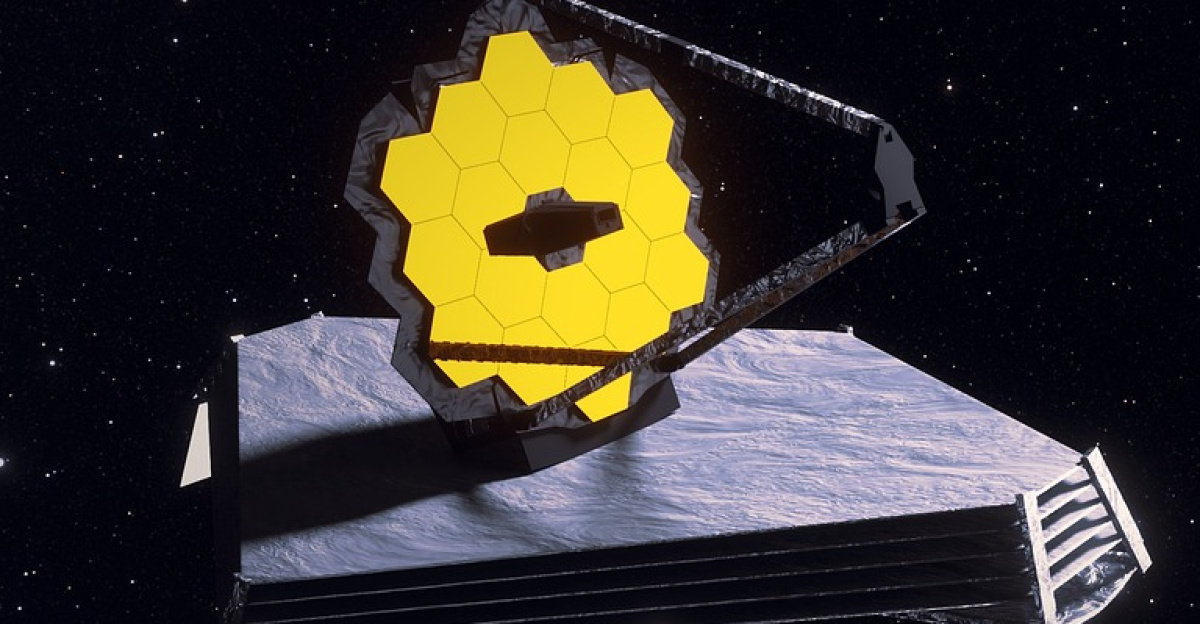
Despite its significance, LAP1-B likely represents merely the beginning of systematic Population III star searches. Researchers note that observations approximately 10 times more sensitive than current JWST capabilities could potentially detect 10 or more similar systems.
Many Population III clusters likely formed at earlier redshifts (z>20) but remain beyond detection range, while others at slightly later epochs (z<6) would be rarer but still observable. The discovery essentially opens a new observational window onto a previously invisible epoch of cosmic history.
Why This Moment Matters for Earth’s Future
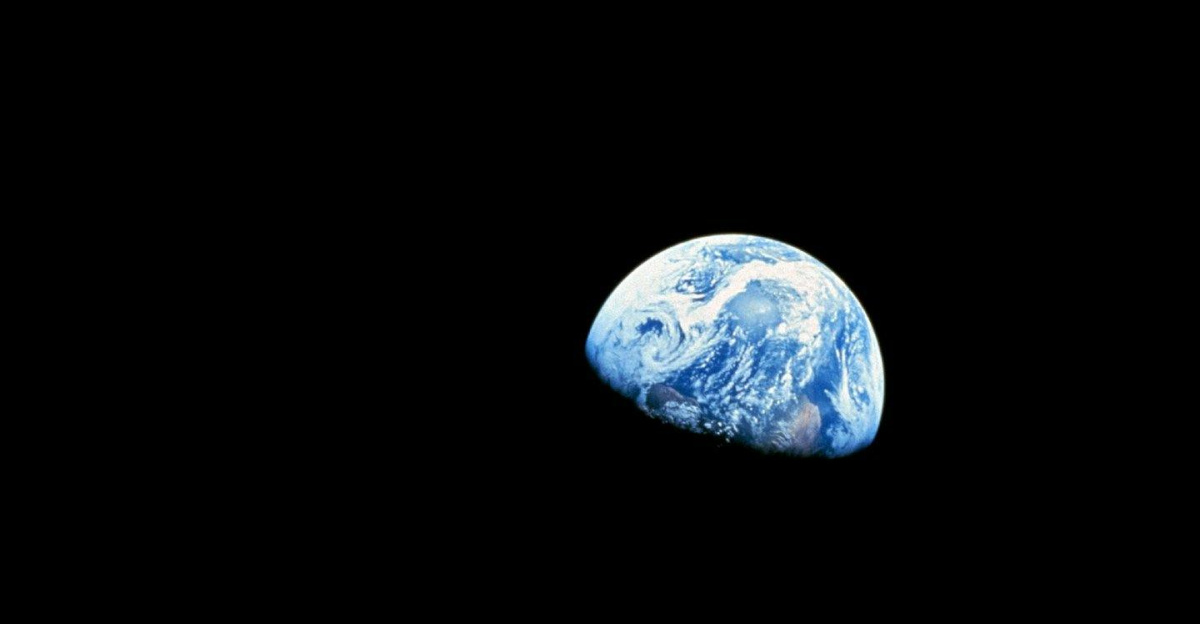
The resonance of this discovery extends beyond astronomical curiosity into profound philosophical territory. Every element heavier than helium in the human body—the calcium in bones, the iron in blood, the phosphorus in DNA—was synthesized in stellar furnaces and distributed by supernova explosions. Without Population III stars, none of the chemical diversity necessary for planets and life would exist.
LAP1-B shows the actual moment when the universe began its ascent from primordial uniformity toward biological possibility.
Looking Back to Look Forward
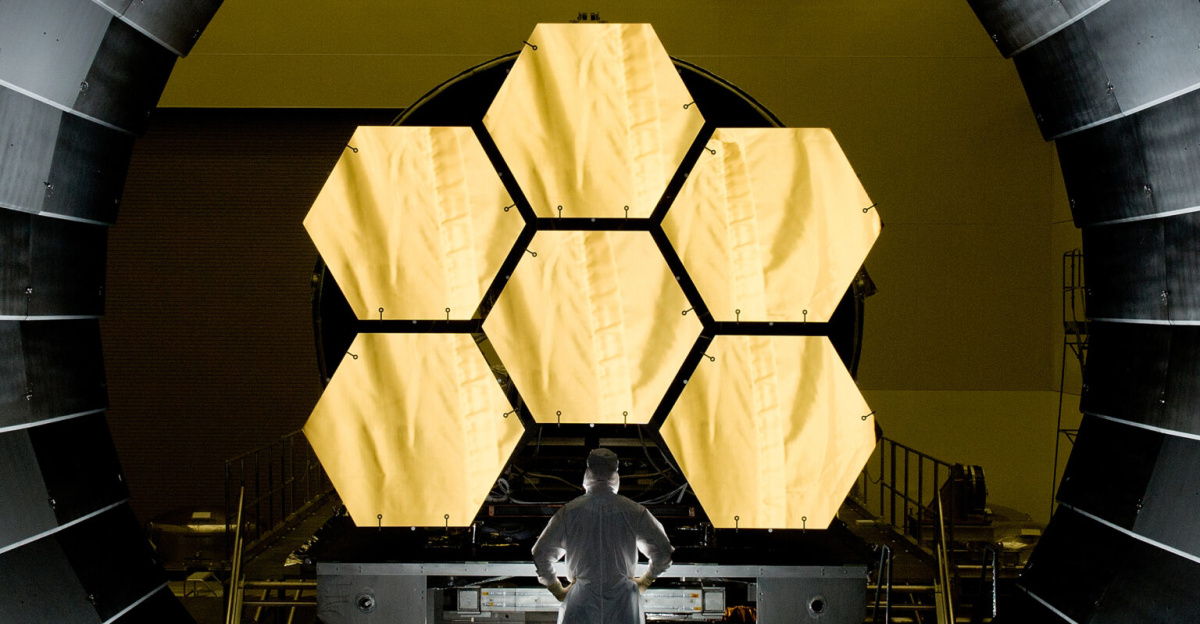
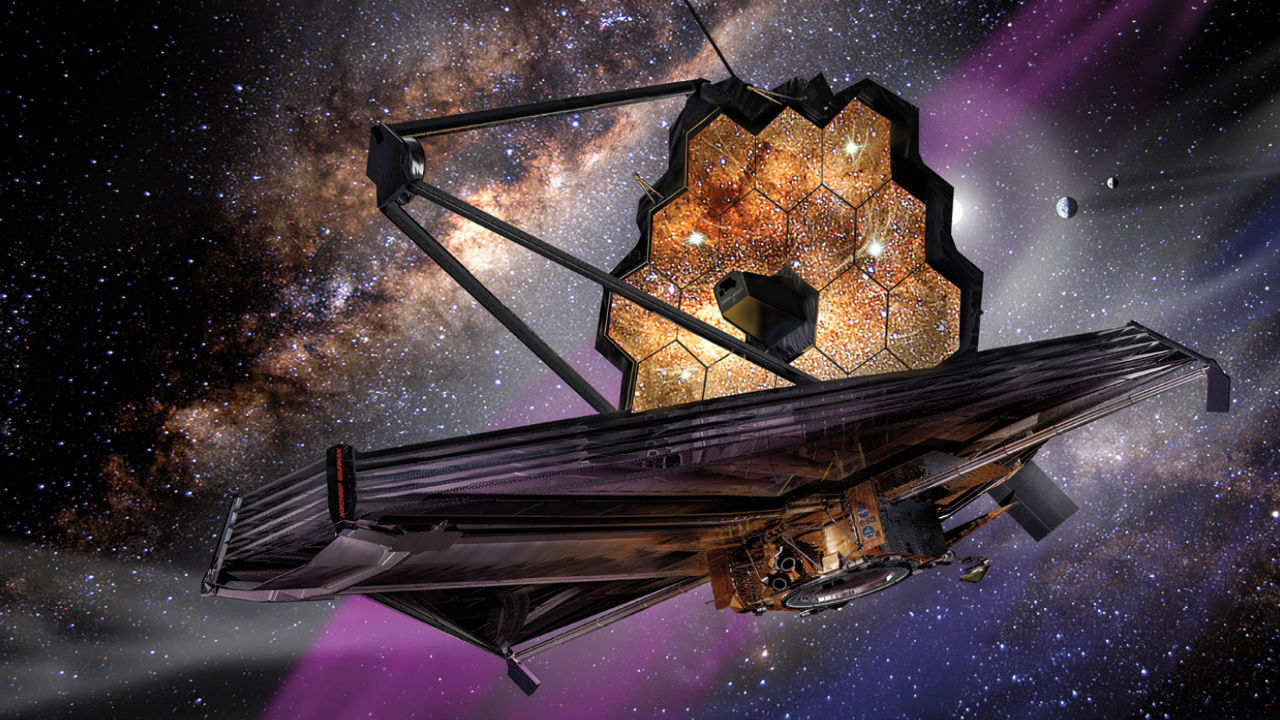
None of this discovery would have been possible without the James Webb Space Telescope’s revolutionary infrared sensitivity. While Hubble could detect visible and near-infrared light, Webb’s instruments capture the severely redshifted ultraviolet and visible light from the universe’s first galaxies, shifting it into the infrared range where dust poses fewer obstacles.
Launched in late 2021, JWST has already transformed astronomy, but LAP1-B represents perhaps its most philosophically significant achievement—humanity’s first confirmed glimpse of the universe’s first stars.
A New Era of Discovery
As researchers build upon this foundation, questions multiply. Could LAP1-B’s nearby companion source, LAP1-A, represent a merger partner in a system of low-mass halos? Could deeper JWST observations reveal individual stars rather than integrated light? Most tantalizingly, how many other Population III systems await detection?
The discovery of LAP1-B signals not an endpoint but a beginning—the moment when the universe’s oldest stars finally stepped into view, their brief lives approaching sunset even as science at last begins to understand their cosmic significance.