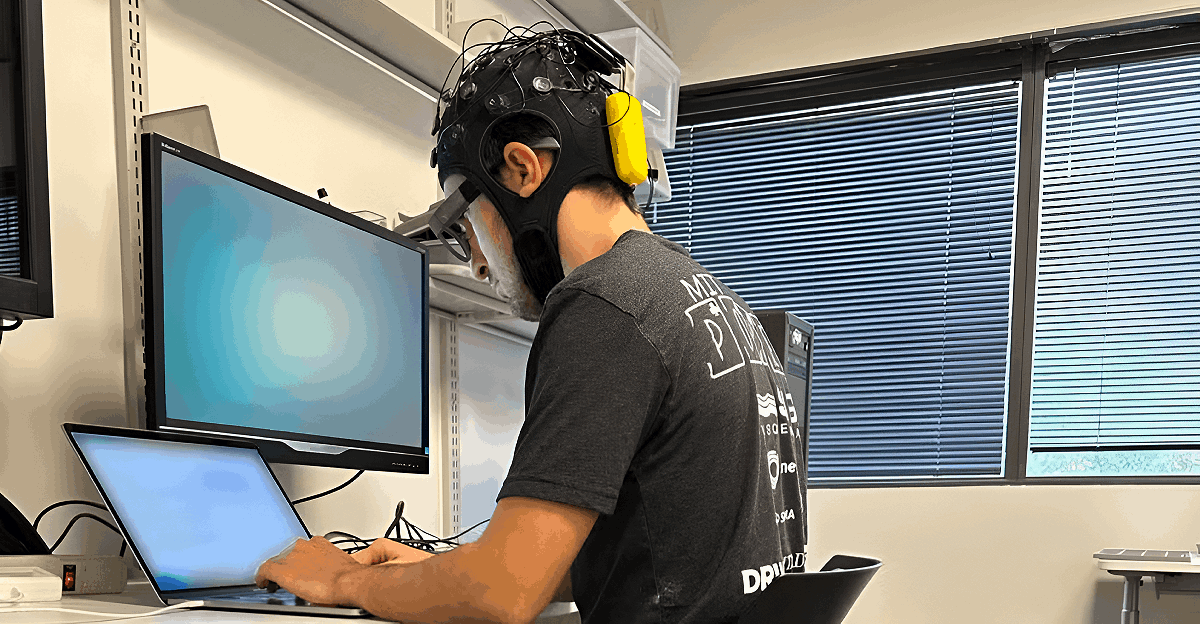
A new MIT Media Lab study has changed how experts think about AI tools like ChatGPT. The team spent four months tracking how people’s brains work while writing with and without AI help.
They discovered something unexpected: people who used ChatGPT to write had much weaker brain activity (up to 55% less) than those who wrote by themselves. This was the lowest connectivity the researchers had ever seen during a writing experiment.
While AI makes tasks easier, it might change our brains in ways we don’t fully understand.
A Quiet Warning
The lead scientist, Dr. Nataliya Kos’myna, wasn’t content waiting for the official review. She published the study early to warn educators before programs like “GPT kindergarten” could take off.
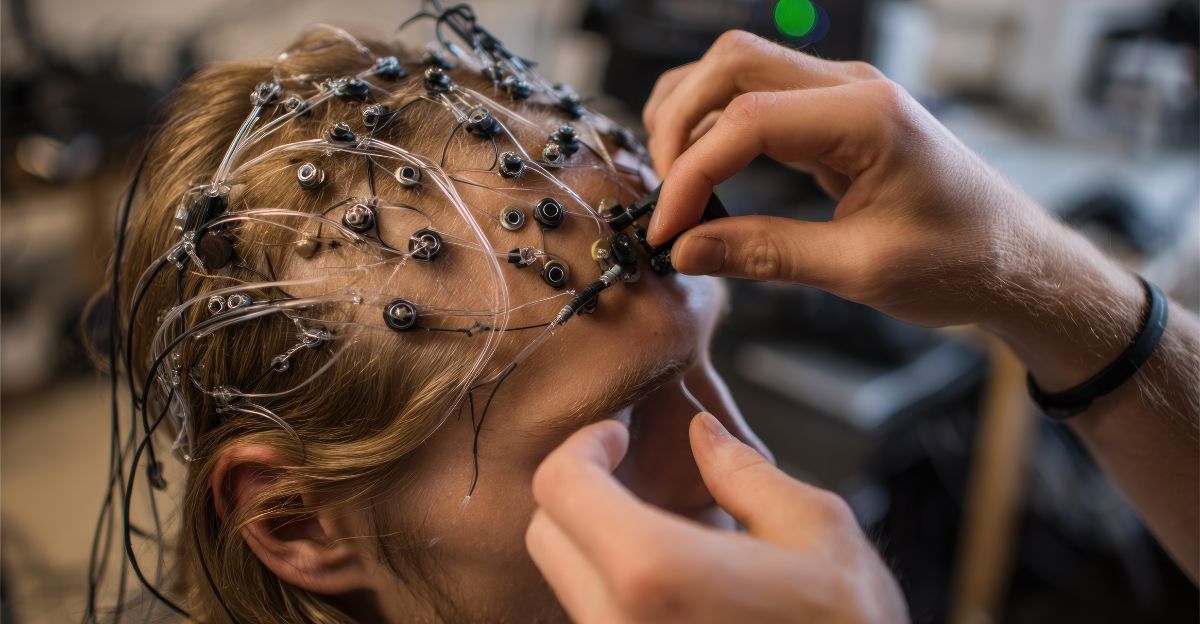
Using EEG (electric sensors that measure brain activity), her team watched what happened inside the heads of 54 participants as they wrote SAT-style essays under different conditions: using ChatGPT, using Google Search, or using only their knowledge and memory.
Kos’myna’s team worried that young, developing brains might suffer most when taught to rely on AI from the beginning, trading authentic learning for quick answers.
Three Parallel Worlds

The experiment set up three kinds of writers. The first group used only ChatGPT, feeding the tool prompts and letting it build their essays.
The second used Google Search, reading, and gathering old-fashioned information before writing in their own words.
The last group wrote totally from memory, using only their thoughts and what they’d learned before.
Each student wrote multiple essays over four months, and researchers observed changes not just in the quality of their writing but also in their memory, engagement, and even how they felt about their work.
Digital Divide in the Brain
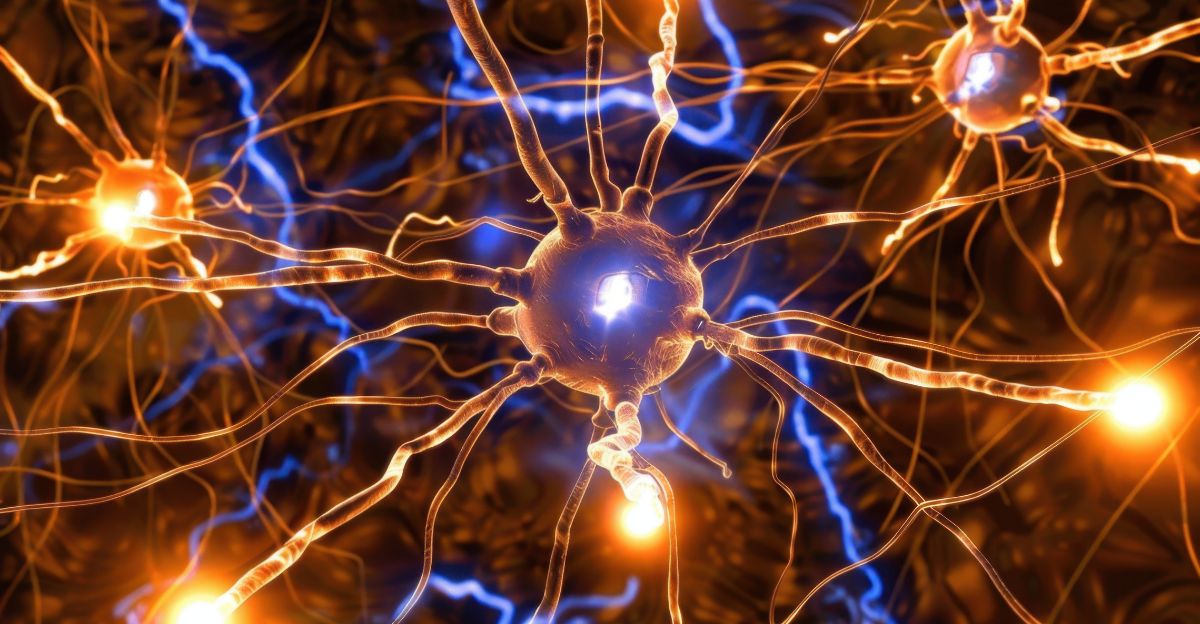
The test results were precise: the more outside help participants used, the less their brains worked.
The brain-only group showed the most active, wide-reaching brain connections, especially in regions tied to creativity and deep memory.
The Google Search group came second. It is still actively thinking, but is getting a boost from external information.
The ChatGPT group had the weakest brain activity, particularly in understanding, remembering, and truly learning information.
Their mental engagement was lower, as if the AI was doing the work for them.
The Real Eye-Opener

The most stunning finding involved memory. When asked a few minutes later to quote something they’d written, 83% of ChatGPT users couldn’t remember their essays.
In contrast, those who’d written without help could recall what they wrote almost perfectly.
This wasn’t about laziness; the brain scans showed that when people relied on AI, their brains didn’t create the same memory traces.
Instead of actively storing and linking ideas, their minds seemed to skip the hard part of learning altogether.
Ownership and Motivation Drops

It wasn’t just memory that suffered. ChatGPT people said their essays felt foreign, almost like something a stranger had written for them.
By the end of the trial, most were copying and pasting the tool’s output, barely editing or thinking it through. Teachers reading the essays said many were technically sound but nearly identical and “soulless.”
Even in conversations afterward, AI users struggled to explain or defend points from their own writing, showing a big disconnect between thought and expression.
Effects That Spread Beyond Writing

The impact didn’t stop with essays. When researchers gave the same people new problem-solving or creative thinking tests, the heavy AI users did worse at connecting and developing new ideas.
Their brains stayed “quiet” in the regions responsible for coming up with novel solutions, suggesting that the habit of depending on AI made it harder to think deeply or creatively in other areas—a ripple effect that worried the scientists.
Experts Growing Concerned

Other brain doctors are noticing similar trends in clinics. Cognitive specialists say more adults are coming in with issues like difficulty paying attention, forgetfulness, or mental fog after using AI a lot.
While nothing is proven, these problems are tied to increased use of tools like ChatGPT in school and at work.
New brain scans from different hospitals also show weaker neural links among heavy AI users—mirroring the MIT results.
A Wake-Up Call for Schools and Companies

Universities and private schools are rethinking how they use AI.
Some have already paused or changed their rules after seeing the MIT data, and several software companies are now working on ensuring AI tools force people to do more active mental work instead of just giving out answers.
Leaders are discussing whether schools should check the brain impact of any new tool, as with environmental regulations.
Long-Lasting Change?

At the end of the study, participants switched roles. Those who had used ChatGPT were now asked to write without any help.
Shockingly, their brains didn’t return to normal; they stayed less active than first-timers who had never used AI.
On the other hand, people who had built their skills before trying ChatGPT showed stronger brain responses than before, suggesting that if you first learn the “hard way,” you may benefit more from AI.
This hints that prior experience builds a brain foundation that can protect against dependency.
MIT Changes Course, Other Schools Take Note

MIT is quietly shifting how it manages AI in the classroom. Instead of banning or detecting AI use, it is focusing on challenging students mentally, regardless of what tools they use.
Discussions among educators include requiring assignments to include tasks that can’t be completed by AI alone, ensuring students are forced to think for themselves.
The key idea is not to block AI but to ensure that it is never used as a crutch instead of a learning companion.
Policy Debates Heat Up

This study has sparked a fierce debate about how much AI should be allowed in schools. Some government officials push for more AI to boost learning and personal productivity.
Others, led by brain scientists and teachers, argue that unless we also protect young people’s mental development, we risk trade-offs we don’t fully understand.
Some states are considering laws to guarantee “AI-free” learning periods so that children can continue building strong thinking skills without shortcuts during key years.
Tech Industry Reaction

AI companies have reacted defensively, funding studies highlighting the technology’s benefits and tweaking features to demand more user interaction.
Some quietly add options that allow users to process ideas or synthesize information rather than copy text.
Internally, companies are worried about being blamed for cognitive harm; a few now market cognitive fitness versions of their AI tools that encourage human engagement.
Can You Recover Your Brain?

Some researchers are working on ways to help heavy AI users “train their brains” back to previous levels.
Early ideas involve slowly reducing reliance on the technology and practicing focused learning or memory games.
While some people get better, recovery can be slow and incomplete, especially after long periods of heavy AI use.
New digital detox centers have opened, claiming to help people regain mental focus once lost.
What Kind of Future?
Scientists and educators warn: if dependency on AI keeps increasing, entire generations might become less innovative, creative, or able to spot false information and manipulation.
But there’s hope: people who build cognitive strength first and use AI responsibly have shown even higher engagement and better thinking.
The real challenge is to help people learn well before letting them lean on AI, so that technology makes them smarter, not weaker.
Lawmakers Step In

After media coverage of the MIT study, politicians in Congress started working on new laws.
One proposed bill, the “Cognitive Protection in Learning Act,” would force AI tools to include brain-training features in school settings. In Europe, some governments consider brain health rules for AI just like they do for privacy.
These changes could become worldwide standards and change how companies design their tools.
Professionals Feel the Impact

The conversation isn’t just about students. Lawyers using AI to scan documents, for example, are now required to demonstrate their analysis skills, and doctors are being asked to maintain their diagnostic thinking when using AI tools.
Financial firms worry that set-and-forget AI tools might limit employees’ ability to spot risk or oddities independently, making markets less stable.
Public Reaction, Good and Bad

The study has gone viral online, with hashtags like #SaveOurBrains gaining traction, parents calling for no AI zones at schools, and brain-training communities popping up on Reddit and elsewhere.
But the internet has also produced false rumors, with wild claims that AI makes you dumber or changes your DNA.
Responsible scientists are fighting back by sharing the facts—that AI changes brain patterns but doesn’t literally damage brains or cause disease.
Is This Just Another Tech Panic?

Some experts point out that every new tool, from writing itself to calculators, was once feared to “destroy thinking.” Those earlier fears were overblown.
However, this study shows AI could be different, since it isn’t just a tool for specific tasks but can potentially replace many types of complex thinking at once—unless we are careful.
When calculators arrived, students still had to learn how math works before using them.
Many argue we should treat AI the same way: train the brain first, then let the technology help you go further.
Brains First, AI Second

MIT’s research sends a clear message: while using AI tools like ChatGPT to write and learn may make life easier, it can also dull our brains’ activity and hurt our ability to remember, think independently, and create new ideas—especially if we start depending on them too soon.
For most people, this cognitive debt manifests as no memory of their work and difficulty thinking deeply, even after quitting AI.
But those who practice strong thinking first and treat AI as a partner, not a substitute, can get the best of both worlds.
As schools, families, and businesses decide how to use AI, the top priority must be building and exercising the mind before reaching for the nearest shortcut.
That way, AI will support and not replace human intelligence.