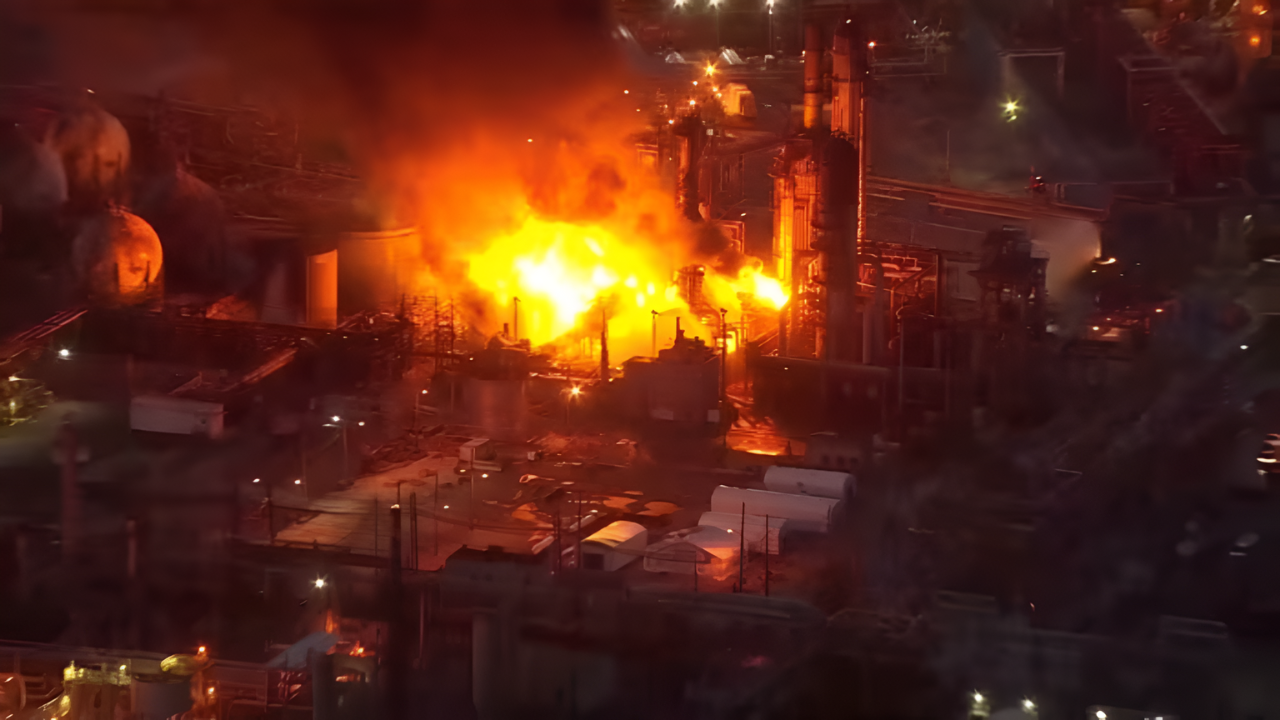
In the predawn hours of October 27, 2025, Ukraine’s Special Operations Forces launched a daring drone assault deep inside Russian-occupied Luhansk, targeting two major fuel-storage facilities. The operation, executed with kamikaze drones, ignited massive explosions at the Starobilsk fuel depot and the Luhansk oil terminal, sending fireballs and thick smoke into the sky as tanks brimmed with fuel.
Disrupting Russia’s War Logistics
Ukraine’s military described the strike as a calculated blow against Russian supply lines. According to the Special Operations Forces, the raid “targeted logistical infrastructure used to supply Russian front-line units,” aiming to choke off fuel flows and weaken Russia’s ability to sustain its eastern offensive. This fits Kyiv’s broader strategy of asymmetric warfare, focusing on undermining the enemy’s logistics rather than direct confrontation.
The immediate aftermath was stark: fuel deliveries to eastern battlefields were thrown into disarray. Occupation officials confirmed that both the Starobilsk depot and the Luhansk oil warehouse were destroyed. Drone footage revealed tanker cars ablaze on rail tracks, underscoring the scale of the disruption. “This operation disrupted Russian fuel distribution along key supply routes,” Ukraine’s special forces reported.
Effects and Russia’s Response

The attack triggered a scramble across Russia’s energy sector. Deputy Prime Minister Alexander Novak announced partial bans on diesel and gasoline exports in late September 2025, citing Ukrainian strikes that had reduced Russia’s refining output. State-owned energy firms began rerouting shipments and tightening security at remaining depots.
Reuters reported that “fuel shortages have been widening across Russia” as Ukraine’s drone campaign intensified throughout 2025. Wholesale gasoline prices in Russia reached record highs in August, with prices rising by approximately 50% since the beginning of 2025. Since the start of the year, gasoline prices in Russia have risen by more than 25% overall.
Local Impact
Despite the inferno, depot workers escaped unharmed. Luhansk’s Kremlin-installed energy minister confirmed, “Employees were promptly evacuated, and there were no injuries.” Rapid evacuation protocols likely prevented casualties, but the incident underscored the dangers faced by those working at strategic infrastructure sites.
Reuters documented “motor fuel shortages across several regions in Russia.” Fuel supply disruptions hit nearly 60 Russian regions, with annexed Crimea facing severe shortages where authorities imposed a 20-liter-per-person cap, prompting panic buying and long queues. Russian Energy Minister Sergei Tsivilyov acknowledged that “messages about temporary shutdowns at some facilities also fueled panic buying and a jump in exchange prices.”
Environmental and Economic Consequences
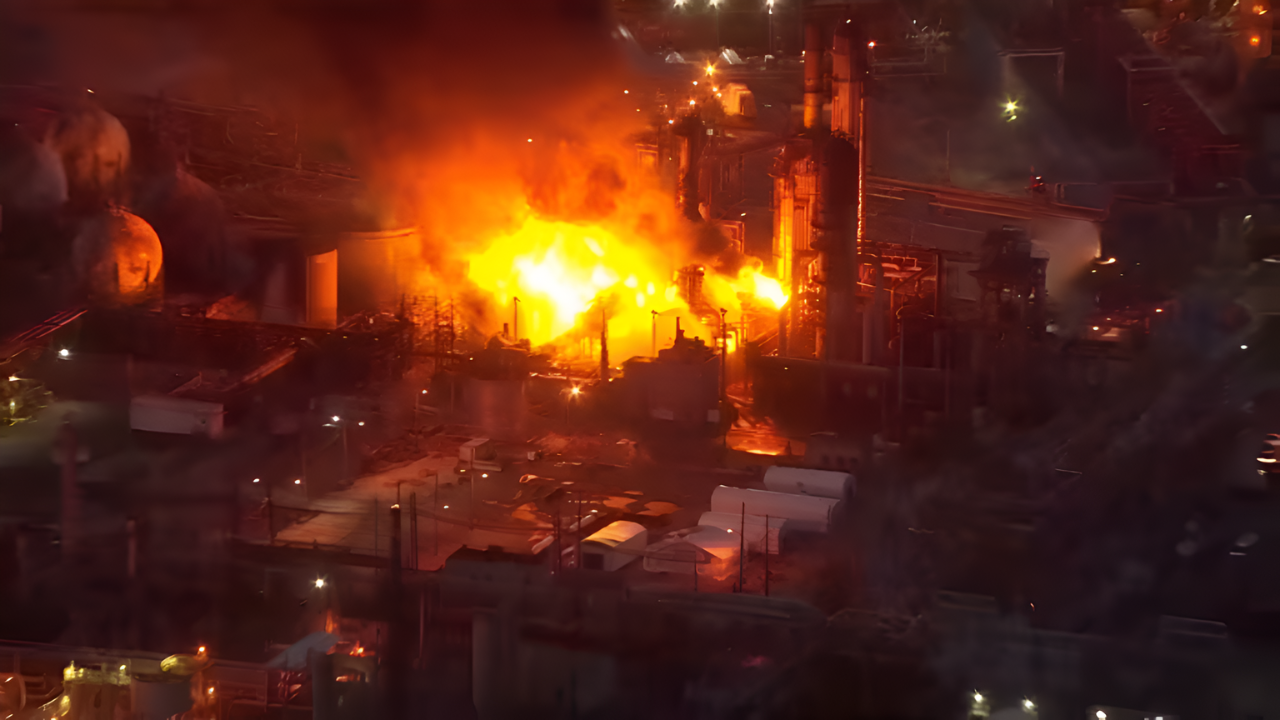
The destruction of the depots left a toxic legacy. Burning petroleum released hazardous pollutants into the air and soil. United24 Media described the event as “triggering a series of explosions and large-scale fires.”
Economically, the strike reverberated beyond the battlefield. Each depot stored millions of liters of fuel, and their loss means higher replacement costs for Russia. Analysts estimate that Ukraine’s drone campaign has reduced Russia’s operational refining capacity by approximately 17-21%, with some estimates indicating 17% of Russia’s oil refining capacity has been impacted by drone strikes. Moscow’s war budget must now absorb steeper procurement costs.
Escalation and Global Implications

The Luhansk raid marked a continuation of Ukraine’s intensified logistics war. Russian authorities condemned the strike and vowed to strengthen depot defenses, while Ukrainian officials defended the operation as justified measures to defend Ukraine.
Western military aid to Ukraine plunged by 43% in July and August 2025 compared to the first half of the year, according to Germany’s Kiel Institute. In response, NATO’s two newest members, Finland and Sweden, announced they would buy more weapons from the United States to give to Ukraine. Ten European NATO allies signed up to join the Prioritized Ukraine Requirements List (PURL) scheme during a meeting in Brussels in mid-October 2025.
Russia exports roughly 31 million tons of diesel annually. The European Union has been working to phase out Russian gas, with imports falling from 157 billion cubic metres in 2021 to 54 billion cubic metres by 2024. The EU has announced plans to stop all imports of Russian pipeline and liquified natural gas by the end of 2027.
Both sides are rapidly adapting. Moscow redeployed air-defense batteries and ground-scan radars around key fuel sites. Ukraine is scaling up drone production and testing larger munitions. Reports indicate the Pentagon has cleared the transfer of long-range systems to Ukraine, though implementation decisions remain under consideration.
A New Era in Warfare
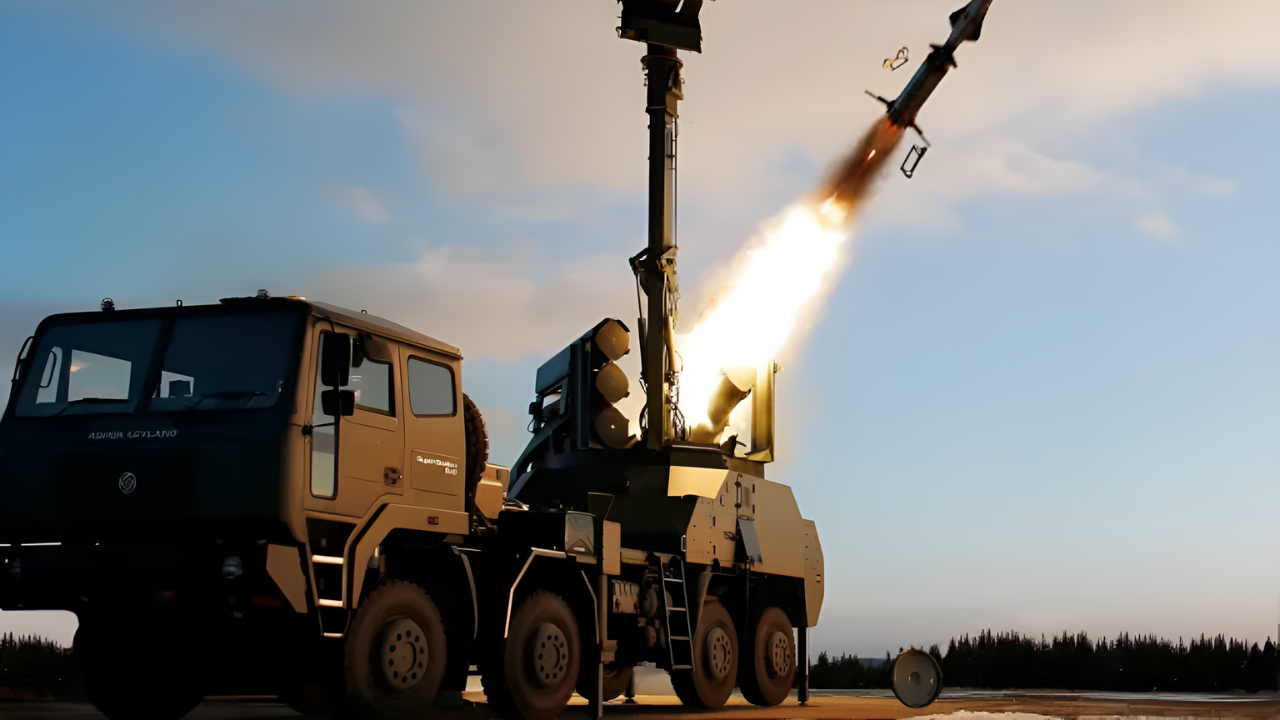
The Luhansk strike highlights how logistics infrastructure has become a central battlefield in modern conflict. Ukraine’s Security Service has reported striking nearly 160 Russian oil facilities throughout 2025, demonstrating the dramatic shifts currently taking place in the conflict. In practical terms, railways, pipelines, and storage sites are now vulnerable to remote attacks, reshaping the stakes for both military planners and civilians.
As winter approaches and the war grinds on, the implications of these strikes will continue to unfold—affecting not only the course of the conflict but also the daily lives of those caught in its path.