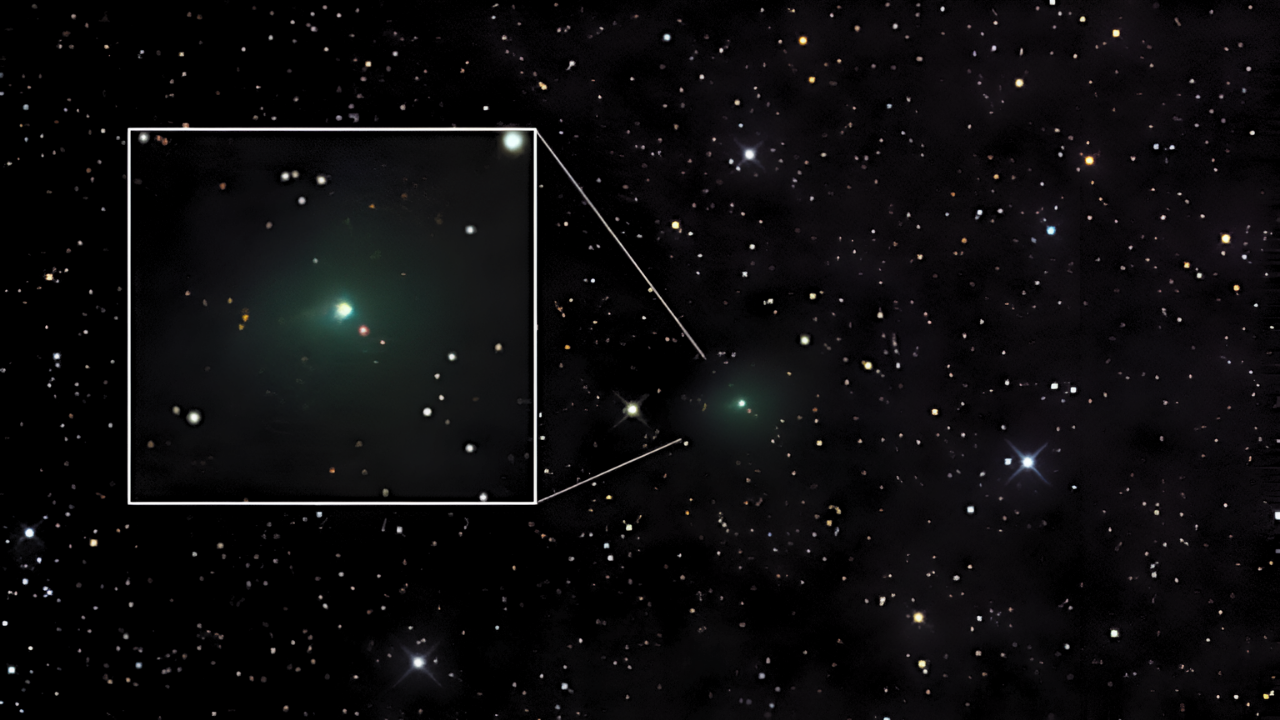
On October 24, 2025, South Africa’s MeerKAT radio telescope detected the first radio signal from interstellar object 3I/ATLAS. The transmission arrived just days before the mysterious visitor’s closest approach to our Sun.
The unprecedented detection marks humanity’s first radio observation from an object beyond our solar system, providing crucial data about its composition.
Third Interstellar Visitor
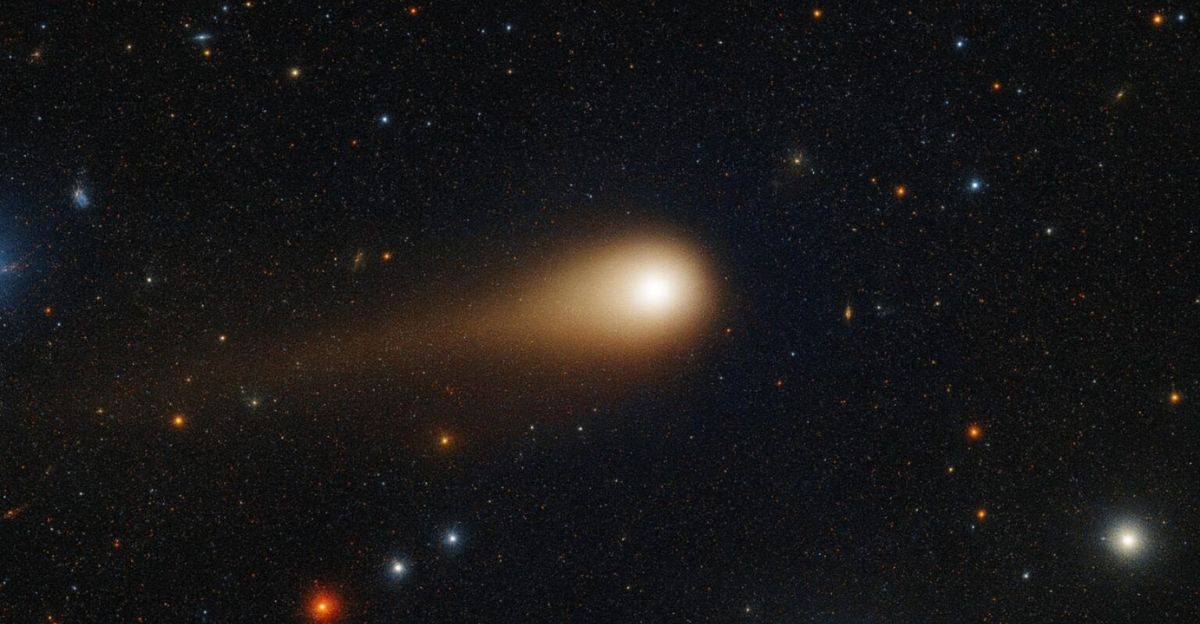
3I/ATLAS was first spotted on July 1, 2025, by Chile’s ATLAS telescope system. Racing through space at approximately 130,000 mph, it became only the third confirmed interstellar object ever detected passing through our solar system.
Unlike ‘Oumuamua and Borisov before it, this visitor would reveal extraordinary characteristics through multiple wavelengths of observation.
What Makes It Special
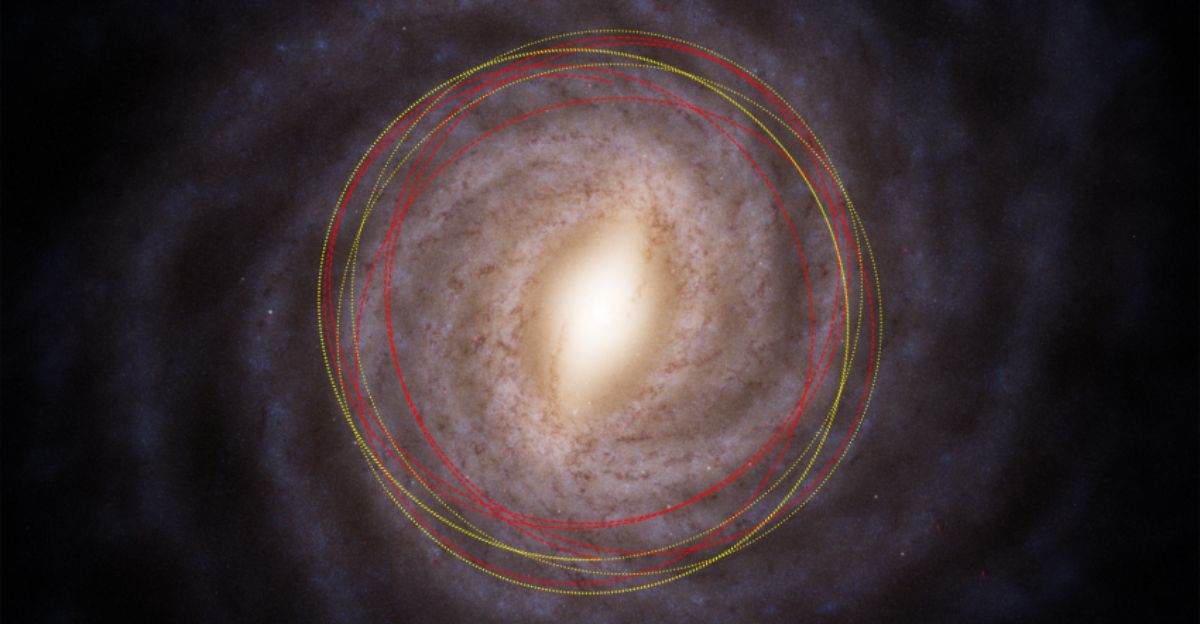
3I/ATLAS originated from interstellar space near the constellation Sagittarius, close to the Milky Way’s galactic center. Its hyperbolic trajectory proves it cannot be gravitationally bound to our Sun.
With an eccentricity greater than both previous interstellar objects, this cosmic wanderer has traveled for potentially billions of years before reaching us.
The Signal Details
MeerKAT detected two distinct radio frequencies: 1,665 and 1,667 megahertz. The signals showed Doppler velocity shifts measured at approximately -15.6 kilometers per second. Previous observation attempts in September failed, making the October 24 detection even more remarkable.
The timing coincided with the object’s solar conjunction, when Earth, Sun, and 3I/ATLAS aligned.
Scientific Community Responds

The detection recorded consistent, measurable hydroxyl signals at precise frequencies. Researchers immediately recognized these as the characteristic emissions of water breakdown products in cometary comas.
The discovery provided the first radio confirmation that 3I/ATLAS exhibits active outgassing, settling questions about its nature as a genuine comet rather than an inactive body.
The Alien Theory

Harvard astrophysicist Avi Loeb has promoted the theory that 3I/ATLAS could be an alien spacecraft disguised as a comet. In papers co-authored with colleagues, Loeb argued the object exhibits characteristics consistent with “technological artifacts” created by intelligent civilizations.
His theories have sparked considerable debate, though mainstream scientists strongly disagree with his interpretations.
Why Scientists Were Suspicious
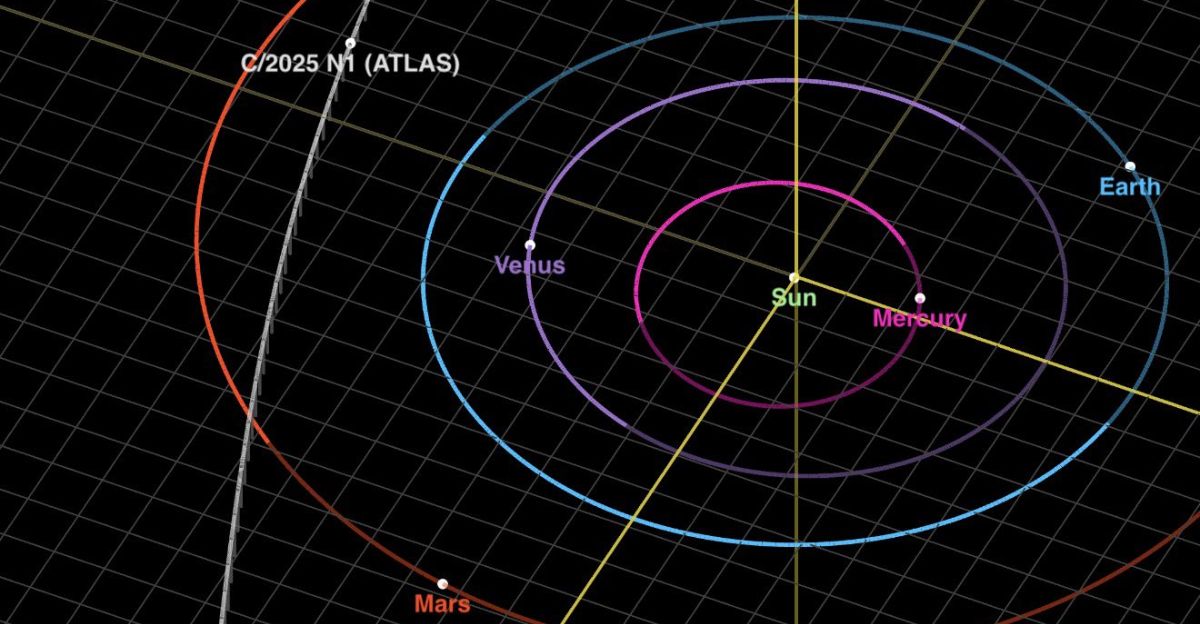
3I/ATLAS displayed puzzling behaviors that fueled speculation. An anti-solar tail pointed toward the Sun instead of away.
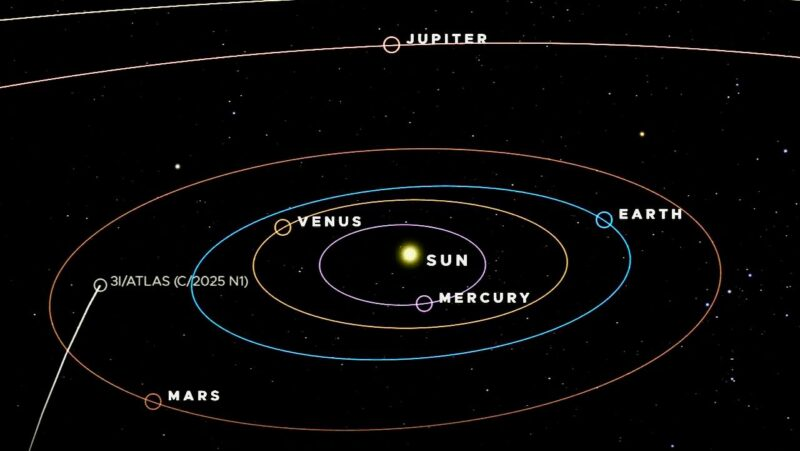
The tail mysteriously flipped direction by September. Its trajectory lies remarkably close to the orbital plane of planets within just five degrees. These anomalies sparked intense debate within the astronomical community.
Chemical Fingerprint Revealed

The radio signals represent hydroxyl (OH) radicals—chemical signatures produced when water molecules break down. NASA’s Swift Observatory had detected these molecules weeks earlier through ultraviolet observations when the comet was nearly three times farther from the Sun than Earth.
Researchers at Auburn University measured water loss at approximately 40 kilograms per second, equivalent to a fire hose at full blast.
Natural or Artificial?
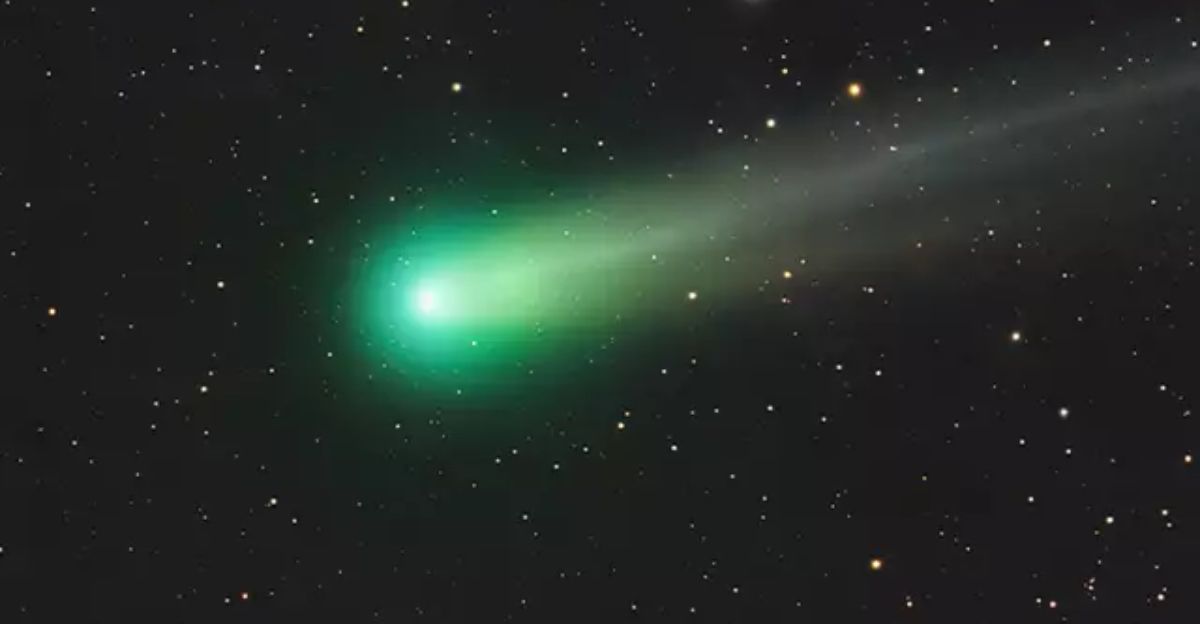
The hydroxyl detection occurred when 3I/ATLAS was approximately 2.9 astronomical units from the Sun. Surface temperature estimates placed it around 230 Kelvin, conditions that matched the observed molecular behavior.
While the signal timing raised initial questions, the chemical signatures are consistent with natural cometary processes rather than artificial transmissions.
What Hydroxyl Means
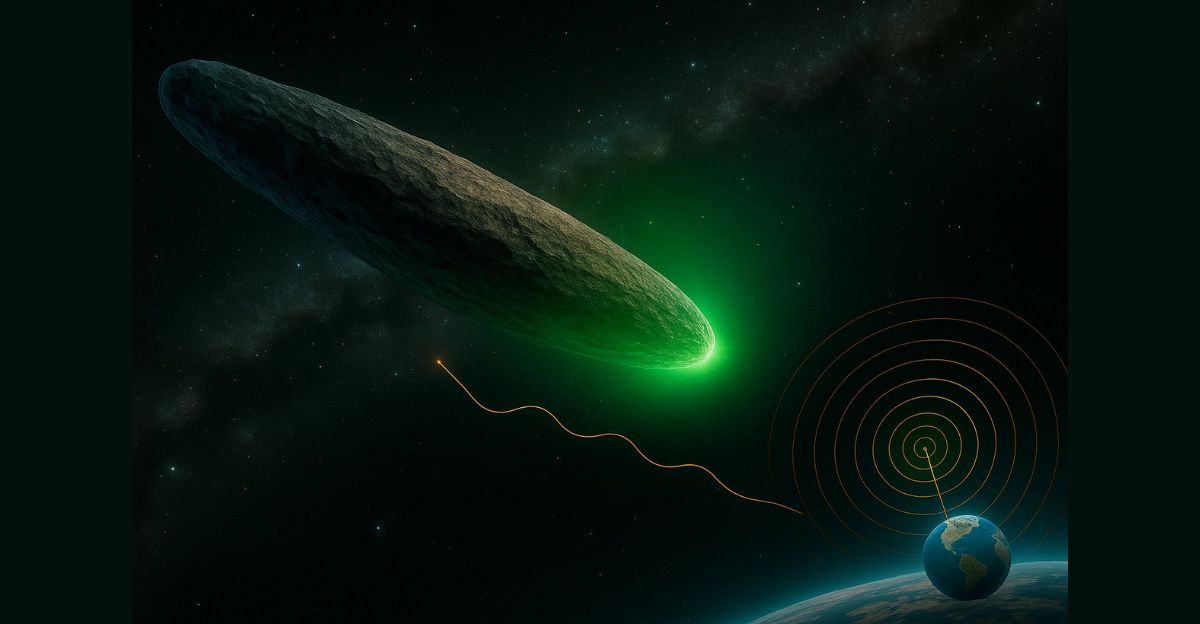
Hydroxyl radicals form naturally during cometary outgassing when solar radiation breaks apart water ice. This process is the hallmark signature of active comets throughout the solar system.
The MeerKAT detection provided the first radio confirmation that 3I/ATLAS exhibits classic cometary behavior, strongly suggesting it’s a natural object rather than a technological artifact.
Surprising Water Activity
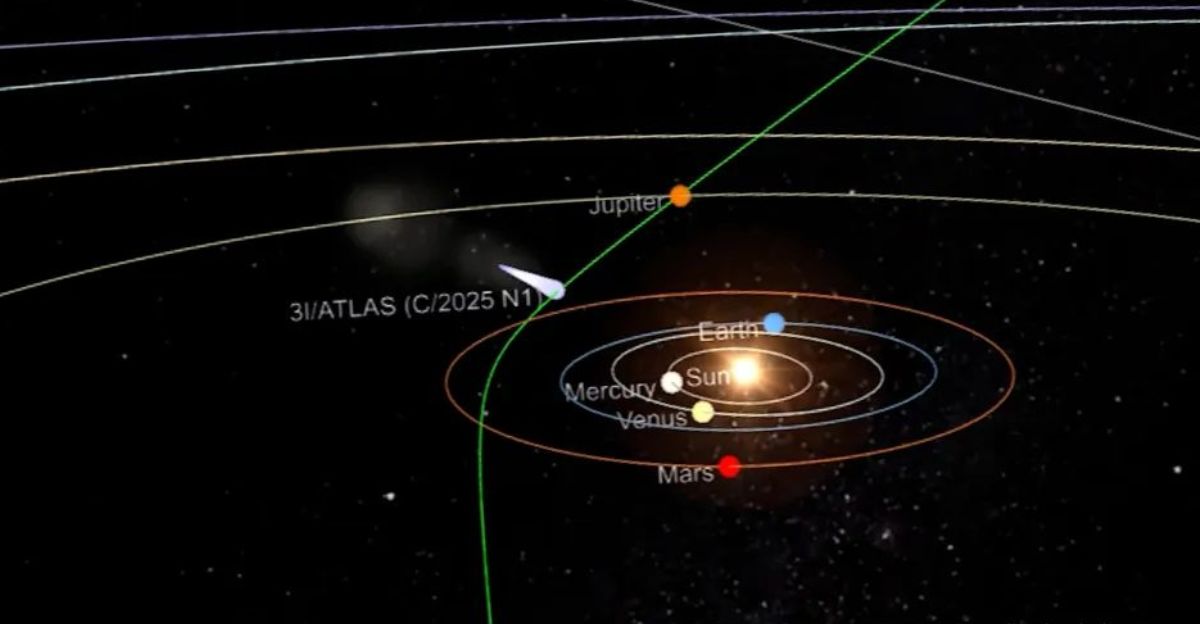
Swift detected water activity when 3I/ATLAS was nearly three times farther from the Sun than Earth.
This distance lies well beyond where water ice typically sublimates on comet surfaces. Scientists believe icy debris chunks floating in the coma act like miniature steam vents, releasing vapor despite the nucleus remaining too cold.
Size and Composition
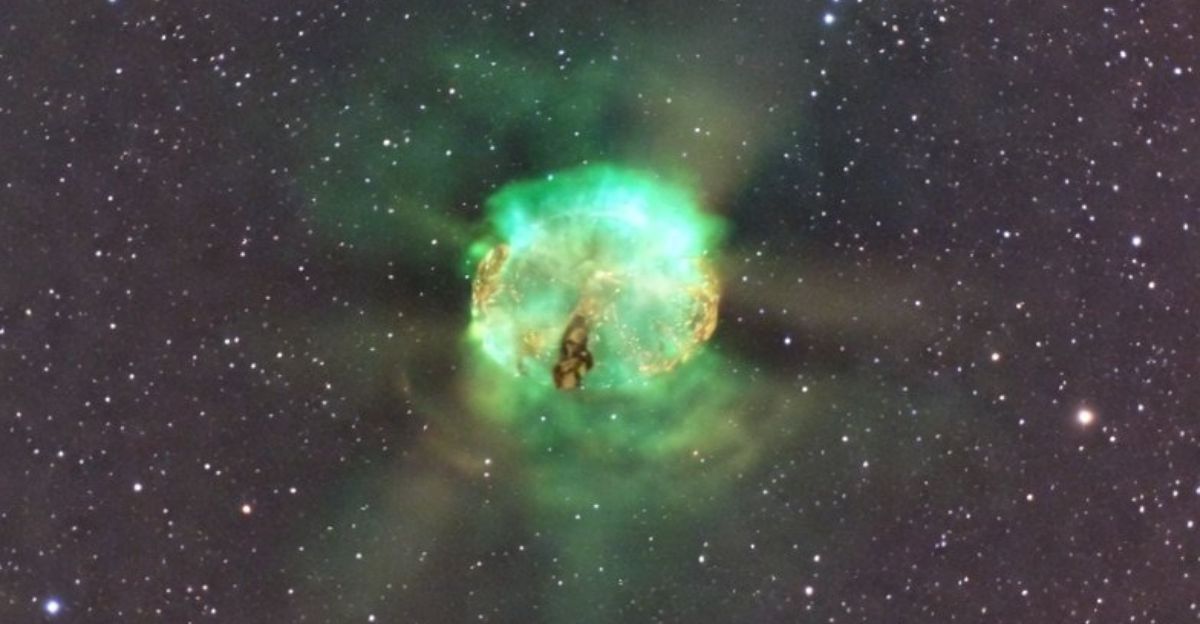
Observations constrain the diameter of 3I/ATLAS’s nucleus to several kilometers. The comet exhibits one of the highest carbon dioxide to water ratios ever observed in comets.
Observations revealed unusually high negative polarization, suggesting its coma contains a unique mixture of icy and dark material from its ancient formation environment.
The Journey Continues
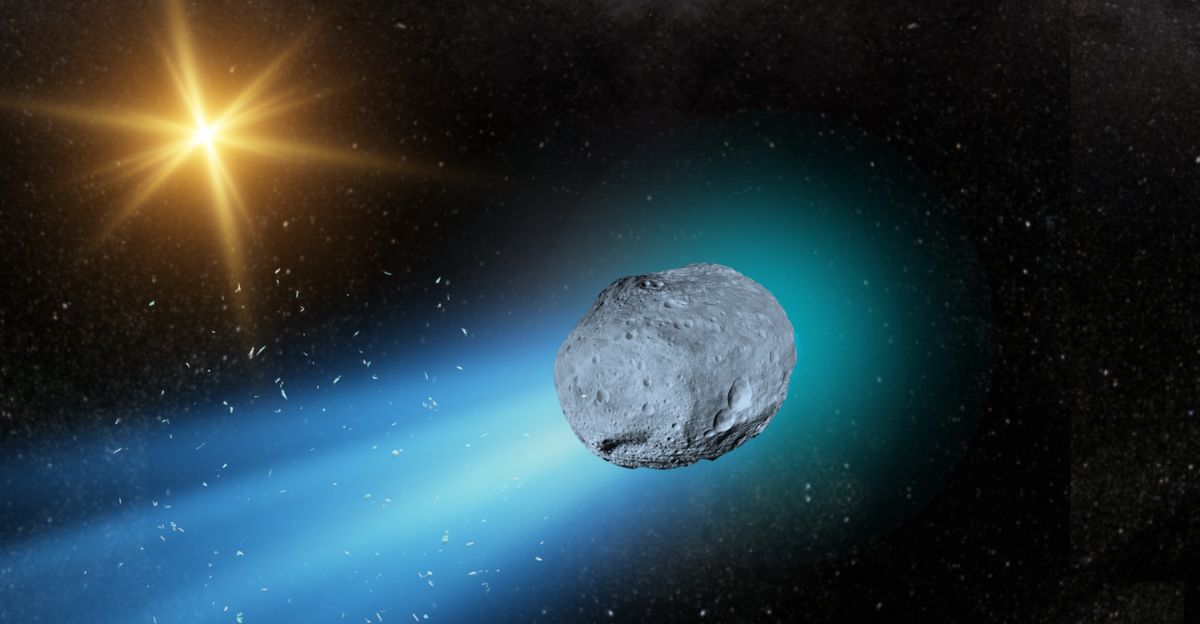
After reaching perihelion on October 29, 2025, at 1.36 astronomical units from the Sun, 3I/ATLAS reemerged from behind our star.
The comet experienced an unexpected brightening event and temporary color change during its solar flyby. It’s now heading outward, visible in pre-dawn skies through telescopes until year’s end.
Expert Opinions Divided

The vast majority of astronomers consider 3I/ATLAS a natural celestial body. Prominent scientist Brian Cox dismissed alien theories as “drivel,” urging reliance on reliable scientific sources.
Penn State astronomers systematically explained Loeb’s observations through well-understood cometary physics and measurement uncertainties rather than exotic explanations.
Future Observations Planned
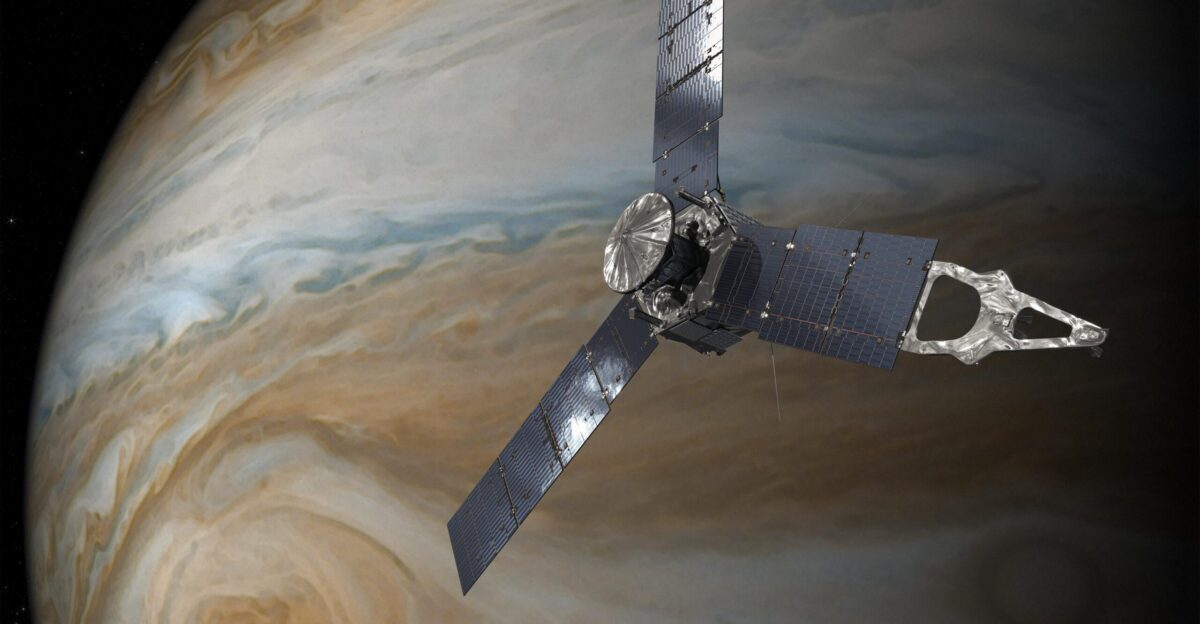
NASA’s Juno spacecraft will observe 3I/ATLAS during its March 16, 2026, Jupiter flyby at approximately 53 million kilometers distance. The probe will use its dipole antenna to search for radio emissions.
The European Space Agency’s JUICE mission also plans observations. These studies will provide unprecedented close-range data from multiple instruments.
Historical Context
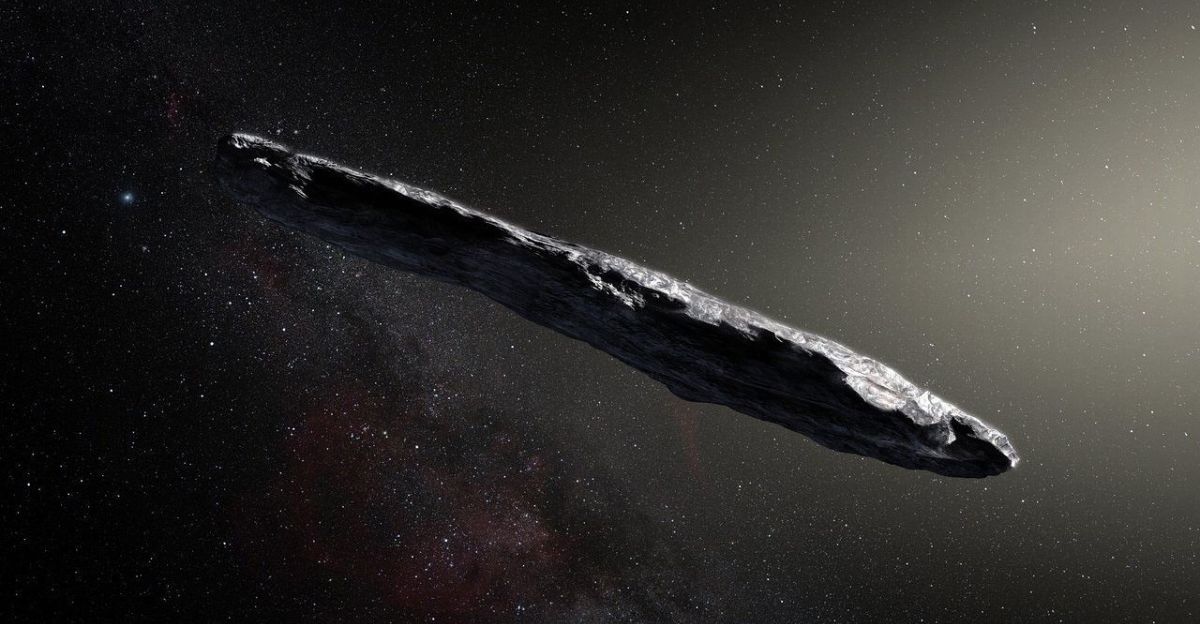
The first interstellar object, ‘Oumuamua, sparked similar alien spacecraft theories when Loeb proposed it might be a “lightsail.” That object’s unusual cigar shape and acceleration fueled intense speculation.
However, scientific consensus eventually determined natural explanations fit the evidence. The pattern appears to be repeating with 3I/ATLAS observations.
Scientific Significance
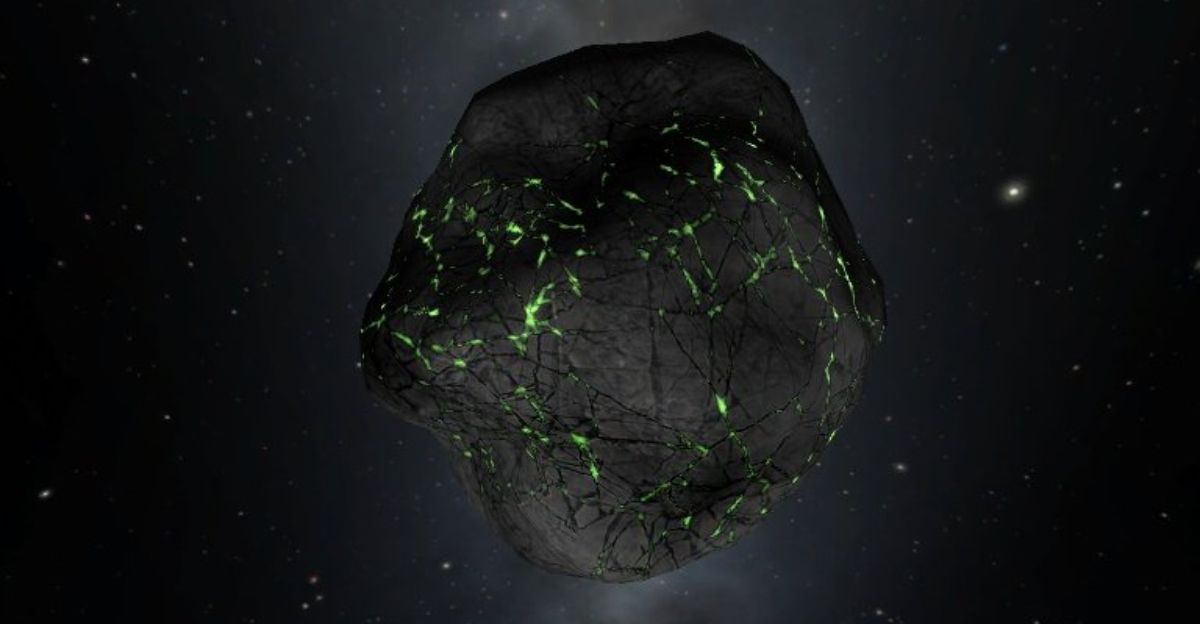
Regardless of origin theories, 3I/ATLAS offers unprecedented opportunities to study materials from another star system.
Its chemical composition reveals how planets and comets form across the galaxy. Scientists describe it as “reading a note from another planetary system.” The data could shed light on whether life’s building blocks commonly travel between stars.
Age and Origin
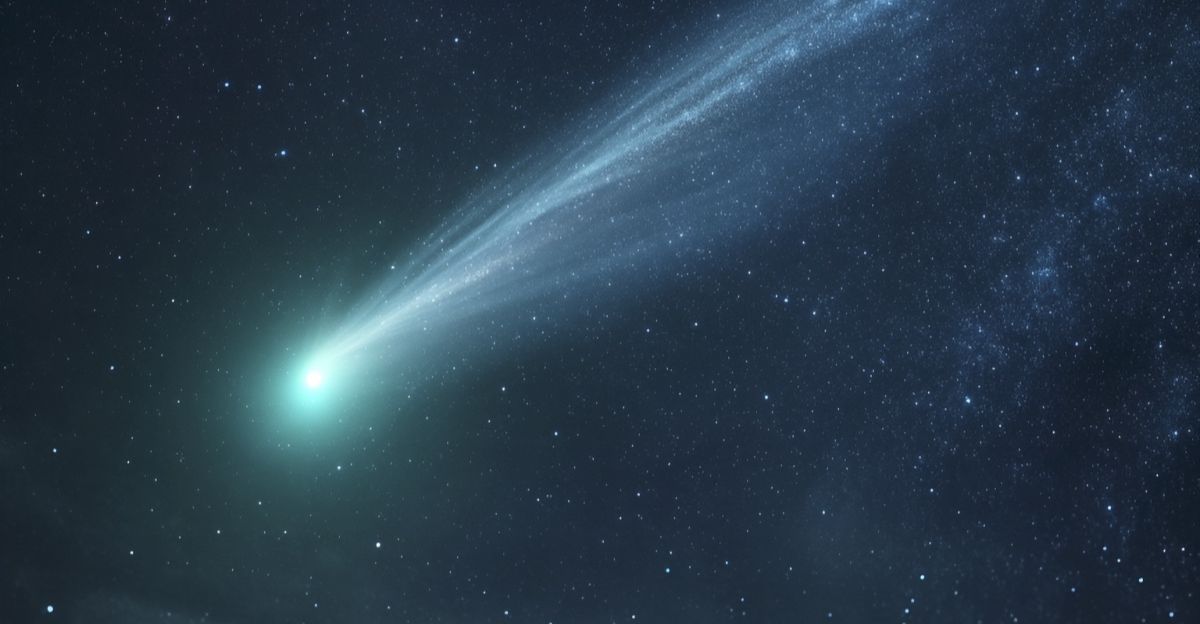
Research suggests 3I/ATLAS may be between 7 and 10 billion years old—potentially older than our entire solar system.
It likely formed in the thick disk region of the Milky Way before being catapulted into interstellar space through gravitational interactions. For billions of years, it drifted through the cosmic void, carrying pristine chemical fingerprints.
The Verdict
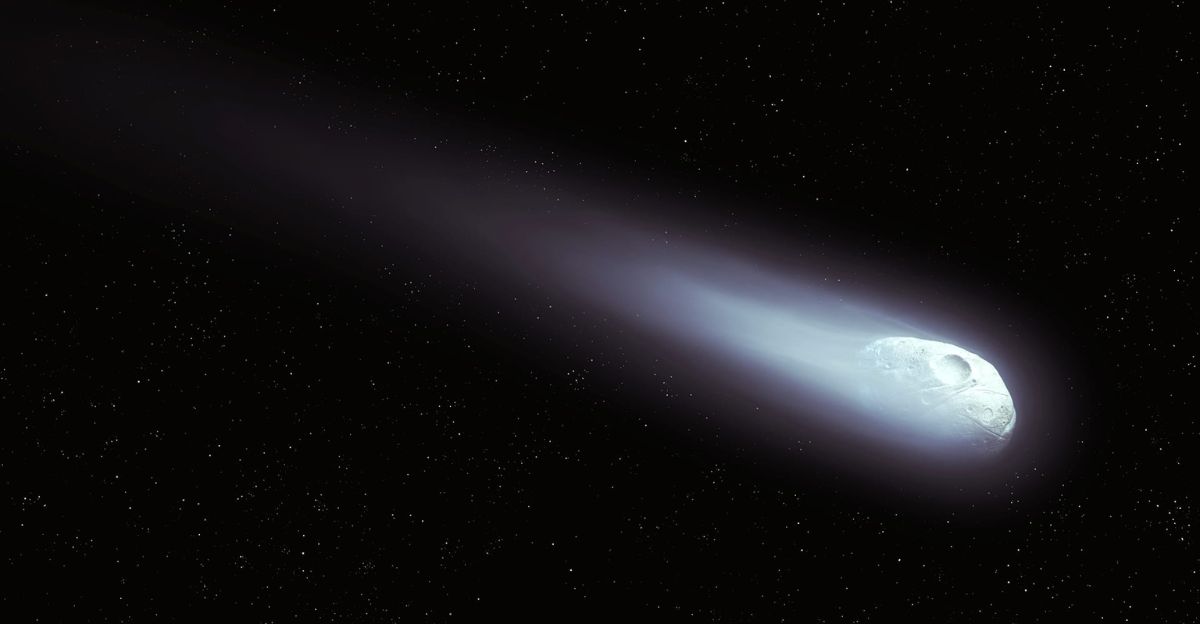
The detection of hydroxyl provides definitive evidence of natural cometary sublimation. If 3I/ATLAS were a metallic spacecraft, telescopes wouldn’t detect these water-breakdown molecules.
While some anomalies remain unexplained, experts emphasize that unusual does not necessarily mean artificial. The scientific community overwhelmingly agrees: this is an extraordinary comet, not alien technology.
What Comes Next
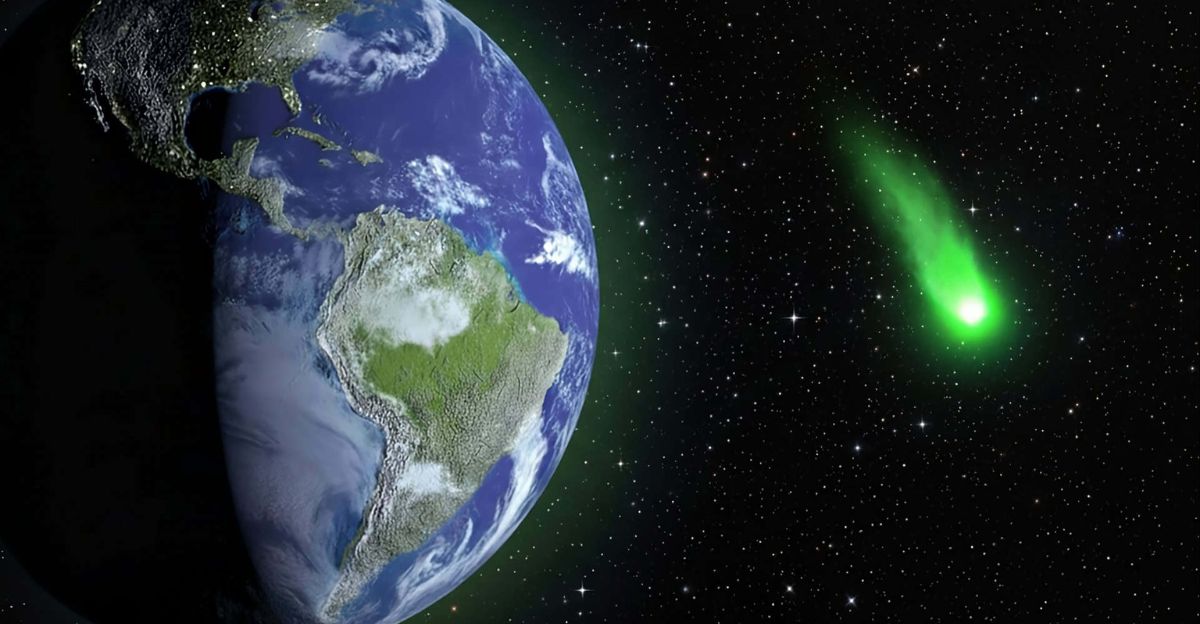
3I/ATLAS will pass closest to Earth on December 19, 2025, at approximately 167 million miles (269 million kilometers or 1.8 astronomical units) distance.
It poses no threat to our planet. Astronomers worldwide will continue observations through May 2026, tracking its journey past Jupiter and eventually Saturn’s orbit. This interstellar visitor will then exit forever.