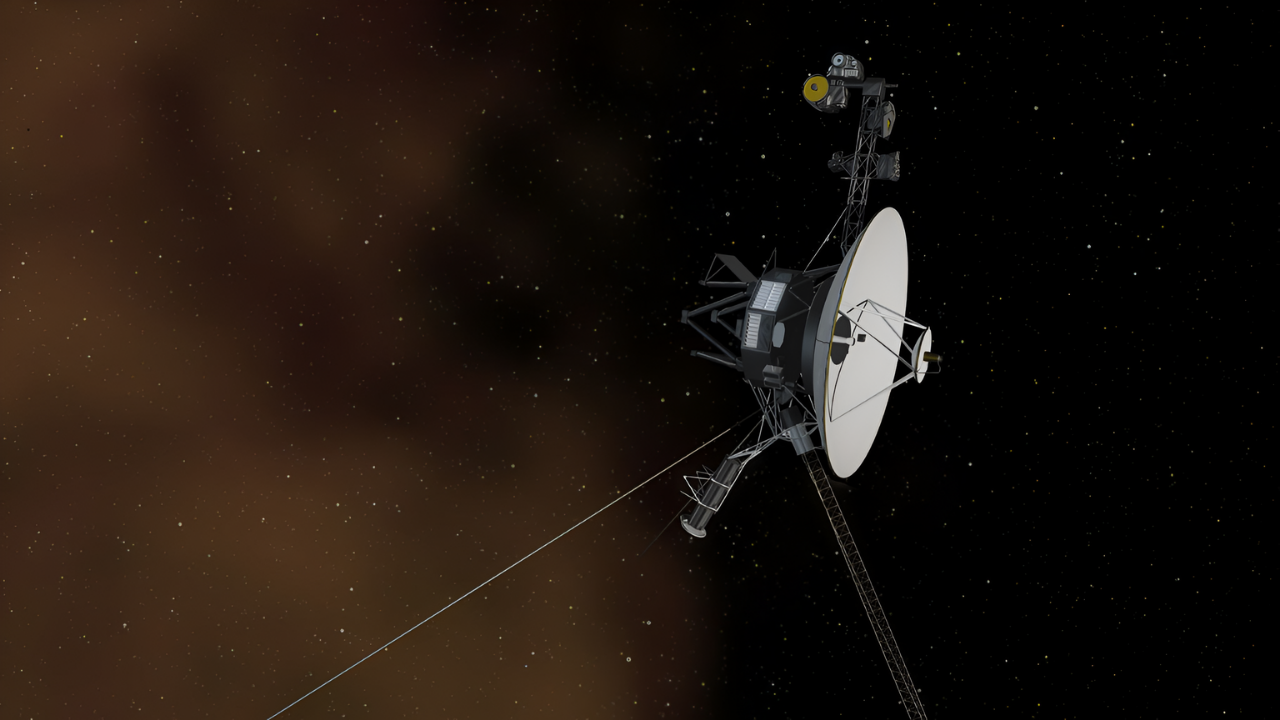
In the vast, silent reaches beyond Pluto, two aging spacecraft have rewritten humanity’s understanding of the solar system’s frontier. Voyager 1 and Voyager 2, launched in 1977, have crossed into interstellar space, revealing a turbulent, superheated boundary where the Sun’s influence ends and the galaxy begins. Their discoveries have upended decades of scientific assumptions and offered a rare glimpse into the invisible shield that protects Earth from cosmic radiation.
A Fiery, Unexpected Barrier
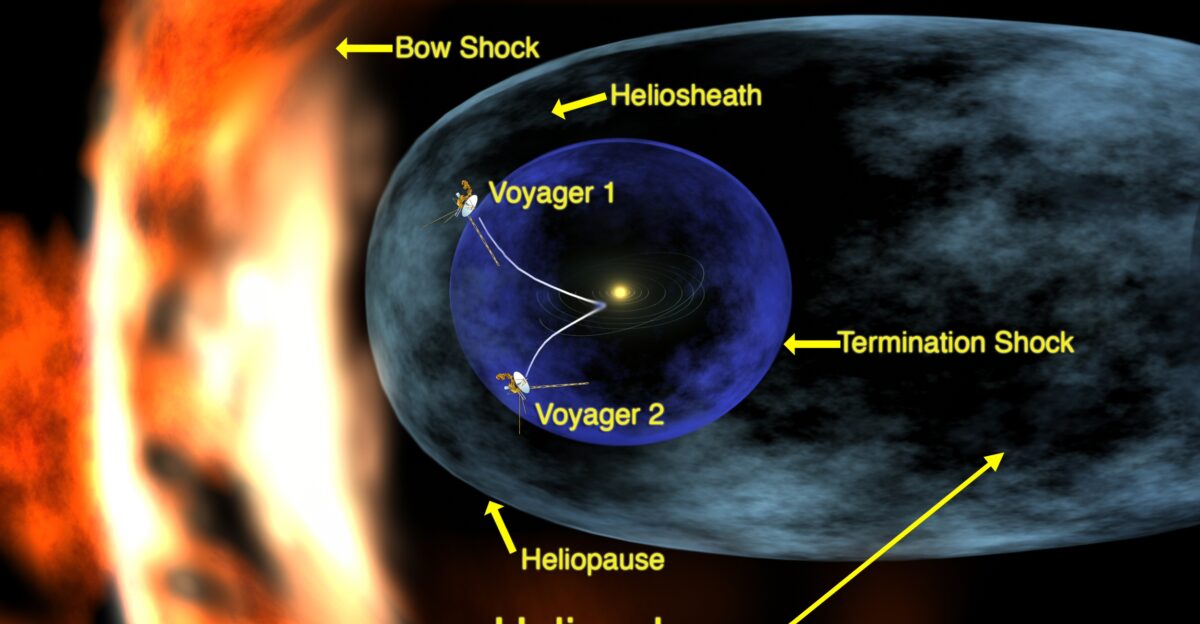
For years, scientists pictured the edge of the heliosphere—the Sun’s magnetic bubble—as a gentle, cooling transition into the interstellar medium. But when Voyager 1 crossed the heliopause in 2012, followed by Voyager 2 in 2018, both spacecraft encountered a “wall of fire”: a region of plasma heated to between 30,000 and 50,000 Kelvin, far hotter than the Sun’s visible surface. “The plasma gets compressed as it hits the heliosphere,” researchers reported, noting that models had predicted much cooler temperatures. Instead, Voyager’s instruments measured nearly double the expected heat, forcing a fundamental rethink of how the Sun’s magnetic field interacts with the galaxy.
Despite the searing temperatures, the density of this plasma is astonishingly low—about 0.039 particles per cubic centimeter, making it billions of times thinner than Earth’s atmosphere. As a result, the Voyagers passed through this inferno unscathed, demonstrating that in space, “hot” does not always mean dangerous.
Voyagers: From Planetary Tourists to Interstellar Pioneers
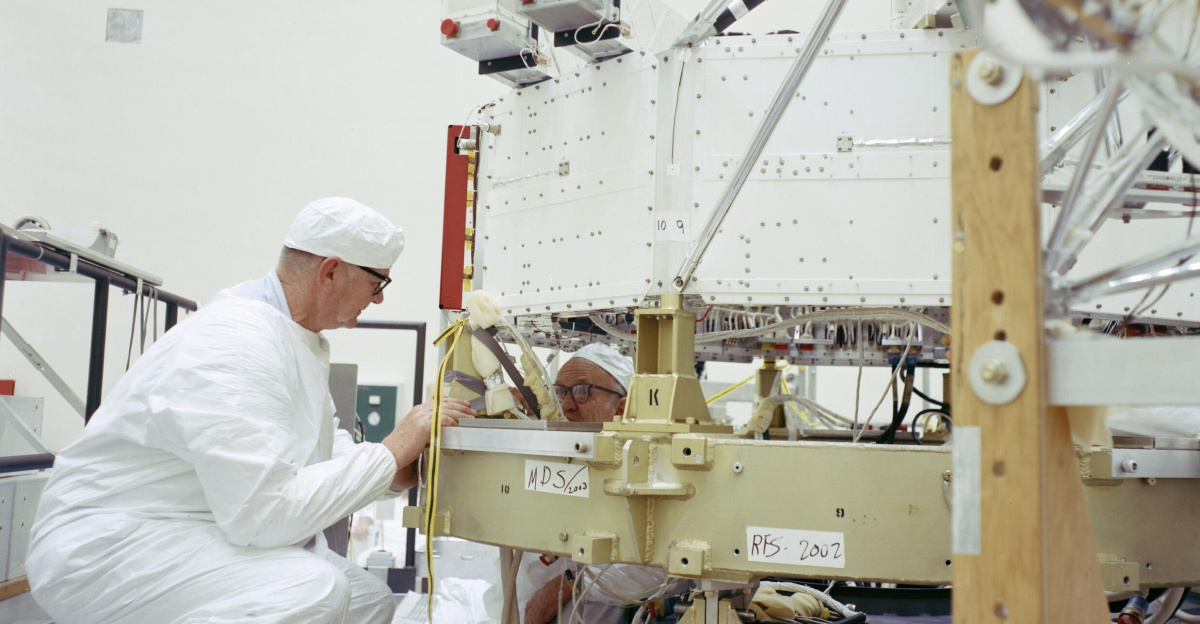
Originally designed for brief flybys of Jupiter and Saturn, the twin Voyagers were built with redundancy and resilience in mind. Their robust engineering allowed NASA to extend their missions far beyond their initial four-year plan. Nearly five decades later, they remain the only human-made objects to have entered interstellar space, powered by slowly decaying plutonium-238 in their radioisotope thermoelectric generators.
As their power supplies dwindle—losing about four watts each year—NASA has shut down non-essential instruments to preserve the most critical science. By early 2025, each probe operated with only three active instruments, yet they continue to transmit faint signals across billions of miles. “The science data that the Voyagers are returning gets more valuable the farther away from the Sun they go,” said Linda Spilker, Voyager’s project scientist at NASA’s Jet Propulsion Laboratory, emphasizing the unique insights these distant explorers provide.
Local Voices and Global Efforts
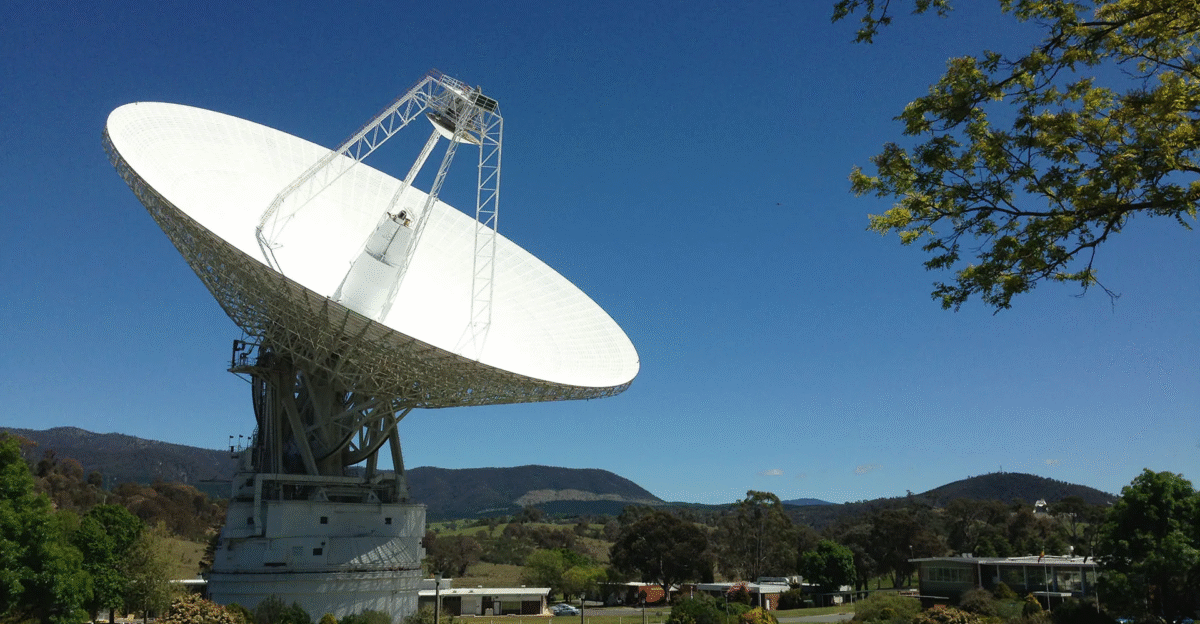
The Voyagers’ journey is not just a triumph of engineering but also of international collaboration. Maintaining contact with spacecraft more than 15 billion miles away requires the Deep Space Network—a trio of 70-meter antennas in California, Spain, and Australia. In 2024, the Madrid facility achieved a milestone by linking all six of its antennas to amplify Voyager 1’s fading signal. The team has been creative in managing the probes’ diminishing power, with project manager Suzanne Dodd overseeing the careful triage that keeps the mission alive. The mission team continues working to maximize every available watt to extend the time they can listen to signals from the edge of the solar system.
This global network exemplifies a rare unity, with agencies across continents working together to track over 30 spacecraft, from Mars rovers to interstellar pioneers. The effort mirrors similar international collaborations, such as the European Space Agency’s work with the Rosetta mission, highlighting how space exploration often transcends national boundaries.
Redrawing the Map of the Solar System
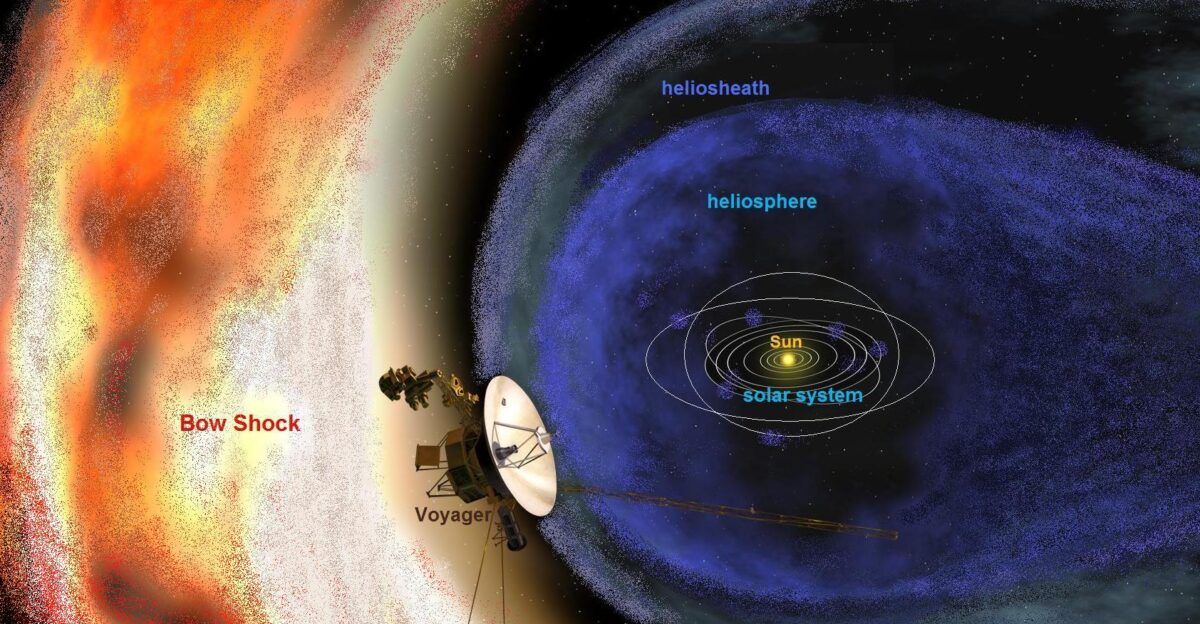
The data returned by the Voyagers have revealed that the heliosphere is not a smooth, symmetrical bubble but a dynamic, warped shield shaped by the pressures of the interstellar medium. Voyager 1’s crossing showed that the heliosphere blocks about 70 percent of galactic cosmic rays, acting as a crucial radiation shield for the planets within. The boundary itself is marked by abrupt changes: a twentyfold jump in plasma density and a turbulent region called the heliosheath, where the solar wind slows and magnetic fields twist.
Scientists are now searching for evidence of a “hydrogen wall”—a layer where neutral hydrogen from interstellar space piles up ahead of the Sun’s magnetic shield. While Voyager data hint at its existence, the evidence remains incomplete, leaving open questions about the true nature of our solar system’s outermost defenses.
Looking Ahead: Legacy and Implications
As the Voyagers approach their fifth decade in space, their endurance stands as a testament to 1970s ingenuity and human persistence. Each carries a Golden Record—a copper time capsule curated by Carl Sagan’s team, bearing music, greetings, and images from Earth, intended for any distant intelligence that might one day find them.
The stakes of their discoveries extend far beyond curiosity. The heliosphere’s ability to shield Earth from cosmic radiation has implications for climate, biological evolution, and the future of human space travel. As new missions like the Interstellar Mapping and Acceleration Probe (IMAP) prepare to study the heliosphere’s boundaries in greater detail, the Voyagers’ legacy endures—reminding us that even the faintest signals from the edge of the Sun’s domain can illuminate the mysteries of our place in the cosmos.